
The Piha Sunset.
The sunsets here are world-class — find out why they’re so distinctive, where to find the best vantage point, when to arrive, and what the locals know that the day-trippers don't.
There's a particular thing that happens at Piha in the last twenty minutes before the sun goes down, and once you've seen it you understand why people drive forty minutes out of the city to catch it.
Piha sunsets are world-class. That's a real claim and worth defending, because every west-facing beach in the world claims something similar, and most of them are exaggerating. Piha isn't. The combination of features that produce these sunsets doesn't cluster together at most beaches; here it does. This piece is about why, and about how to actually have one rather than just hope for one.
What makes a Piha sunset different
Several things are happening at once on this stretch of coast that don't usually happen together.
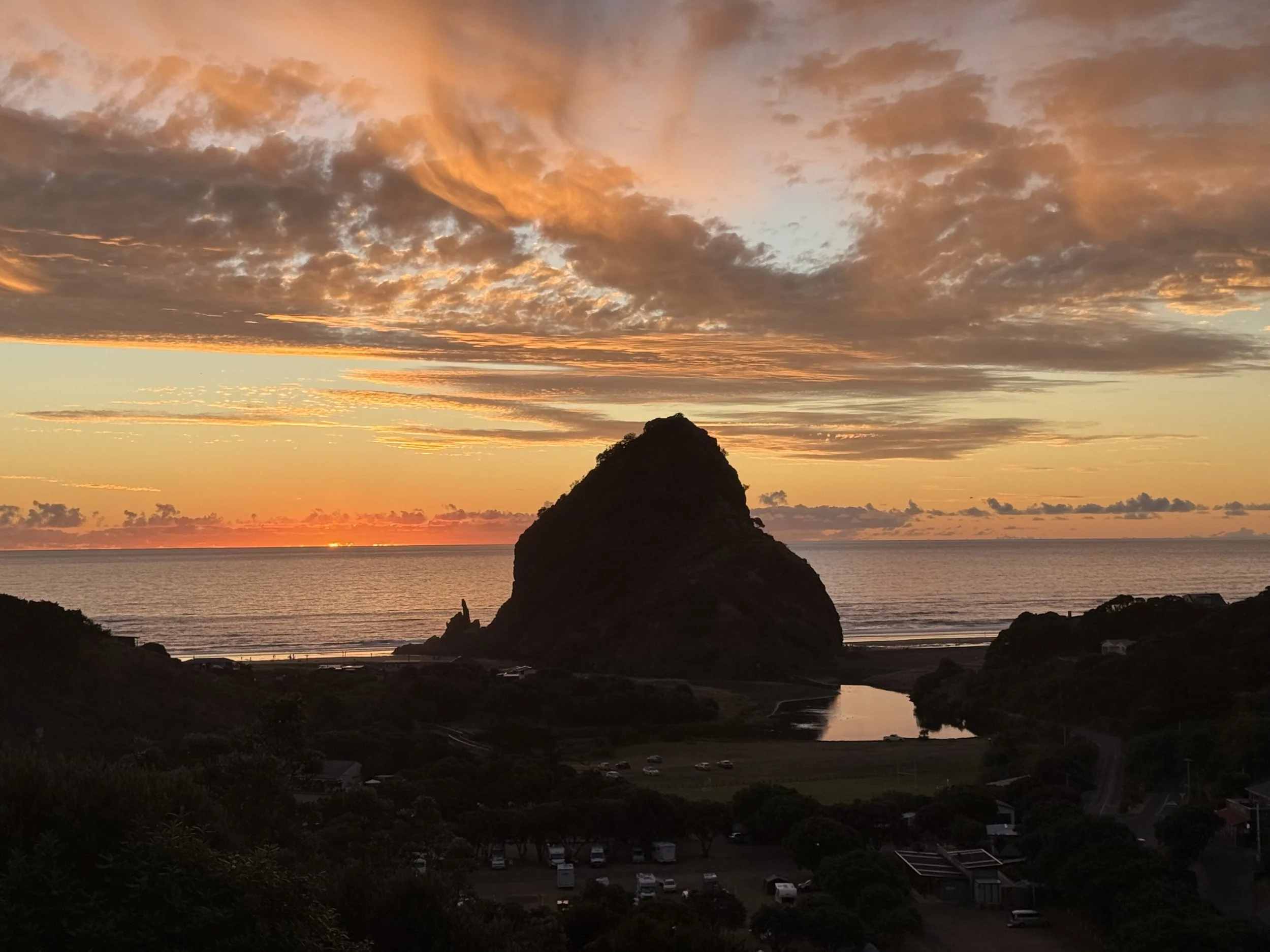
Piha faces almost due west, straight into the Tasman, with nothing between you and the horizon for around 2,200 kilometres until the Australian coast. Most beaches that look spectacular at sunset have some land in the picture — an island, a headland, a city across the bay. Piha doesn't. The sun goes down into open ocean. That's a rarer thing than visitors realise.
❋ The orientation is right.
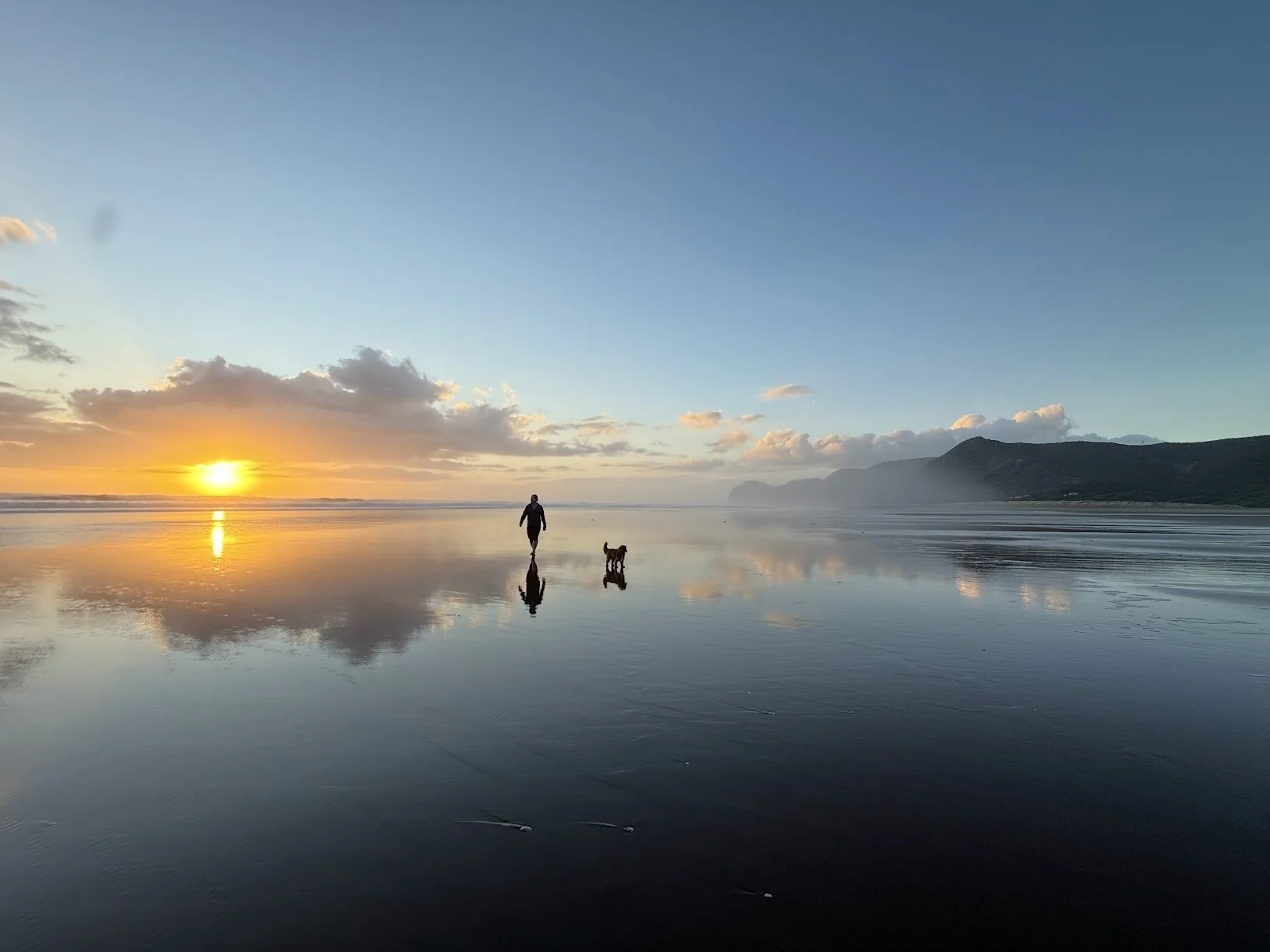
Volcanic black sand absorbs warm light differently from white or golden sand — it doesn't bounce the orange back at you the way pale sand does. Instead, the contrast between the bright sky and the dark beach intensifies as the light drops. The black takes on the colour of whatever the sky is doing; on a good night it goes from charcoal to bronze to deep red over about half an hour. The sand becomes a mirror for the sky in a way most beaches can't manage.
There's a second thing the sand does that's worth knowing about: when it's wet — at the tide line, in the wash zone, in the shallow pools left after the tide retreats — it goes properly reflective. The sky gets doubled. You see the colours twice: once in the sky itself, once in the sheet of wet black sand below. This is why the most striking Piha sunset photographs almost always have water or wet sand in the foreground; the reflection isn't a nice extra, it's half the image. Most beaches can't do this trick because most beaches don't have black sand. Piha does, and the difference is significant.
❋ The black sand changes the light.
For the last twenty minutes of light, the sun sits behind or beside Lion Rock from most viewing positions on the beach. The rock silhouettes against the sky, and the silhouette is one of the more recognisable shapes in New Zealand landscape photography for a reason. You can take a sunset photograph at almost any beach. You can only take a sunset photograph with Lion Rock at Piha.
❋ Lion Rock is the foreground.
The Waitākere ranges rise behind the village, and the bush silhouettes against the eastern sky as the western sky burns. This means you don't lose your peripheral vision into emptiness — there's always green-then-black bush to one side, ocean and colour to the other, and the village in between. The composition is built into the place.
❋ The bush behind frames it.
❋ The cliffs to the south catch the colour from the side.
Te Karekare Point and the headlands south of the beach catch the late light from a sideways angle, which means they go orange and red while the western sky is doing something else. This is unusual — most cliff sunsets either get backlit (and go black) or front-lit (and go ordinary). Piha's geometry produces a side-lit cliff face that holds colour for longer than you'd expect.
Piha's afternoon onshore wind, which surfers complain about, dies down most evenings as the sun lowers. The transition from windy beach to still beach happens in the half-hour before sunset, and the stillness is part of why the sunset itself feels different. You arrive in wind; you watch in calm.
❋ The wind matters.
None of these features is unique on its own. The combination is.
When to come
The sunset itself is good year-round; the kind of sunset and the practicality of watching it changes substantially with the season.
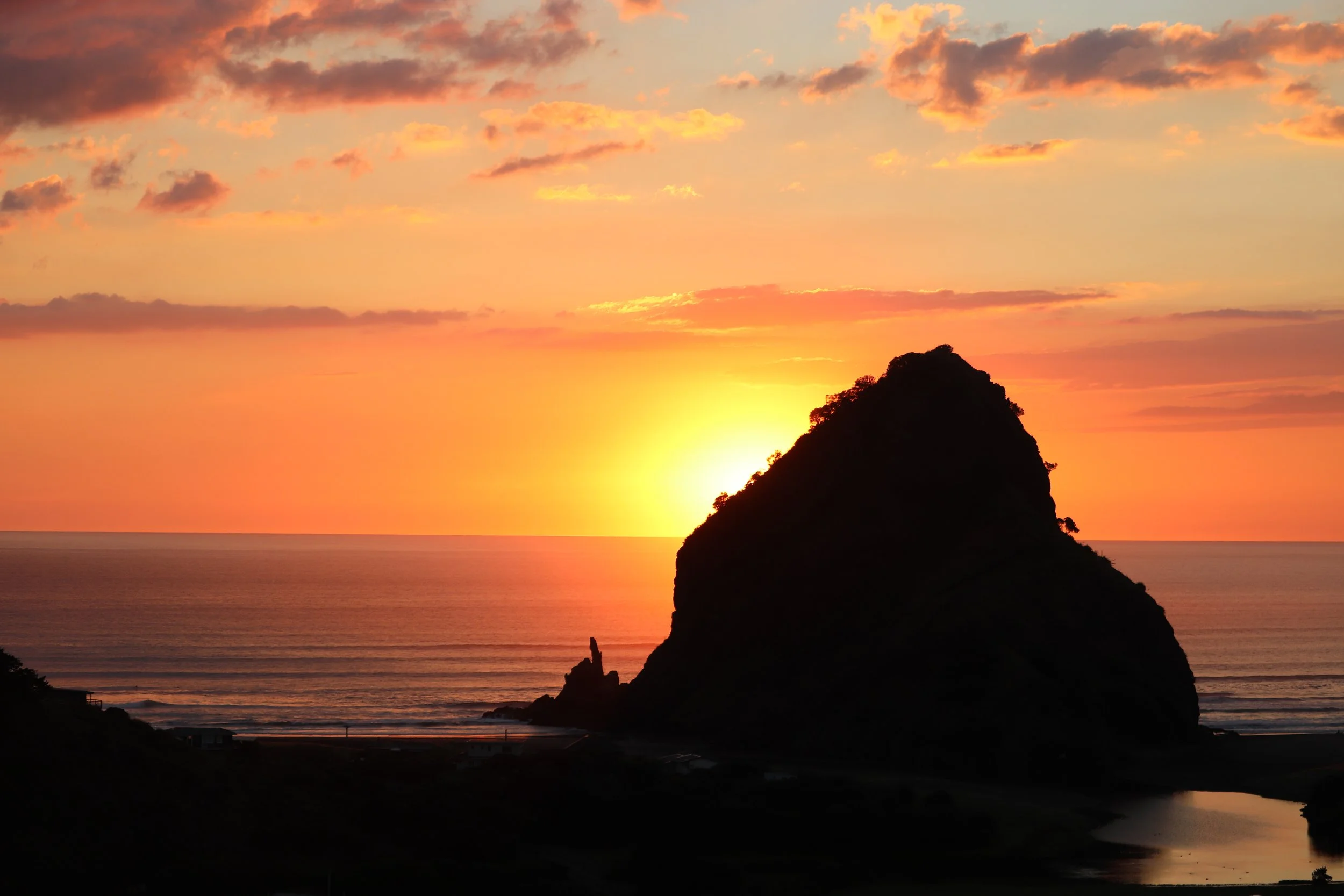
Sunset is late — around 8.30pm at peak — which means dinner before the sunset rather than after, and a long warm evening on the beach afterwards. The weather is most reliably clear in late summer (February especially). The downside: the whole beach knows about it. Lion Rock viewpoints can be busy.
❋ Summer (December–February).
Sunset is around 5–5.30pm. Cold beach watching, but the most dramatic skies of the year — winter storm fronts produce cloud structures that can turn a sunset into something that genuinely doesn't happen at other times. Bring a thermos. The reward is being almost alone with it.
❋ Winter (June–August).
The sunset happens when it happens; the conditions you get are the conditions you get. A clear sky produces a clean sunset. Some cloud produces a spectacular one. Heavy cloud produces nothing visible. The lesson local photographers learn: a "bad weather" forecast often produces the best sunsets, because the breaking-up cloud structure is what lights up. Don't write off a cloudy evening.
❋ On any given day.
Probably the best of it. Sunset moves earlier (back to ~6pm by May), the air is clearer, the cloud structure tends to be more dramatic, and the crowds drop off sharply after Easter. Late autumn at Piha is one of the genuine secrets of the West Coast.
❋ Autumn (March–May).
Variable. The clearer evenings are excellent; the wet ones aren't. Worth checking the forecast. Lifeguards return in late October, which adds a small amount of activity to the beach as the evening warms up.
❋ Spring (September–November).
Where to stand
Different parts of the beach give you different sunsets.
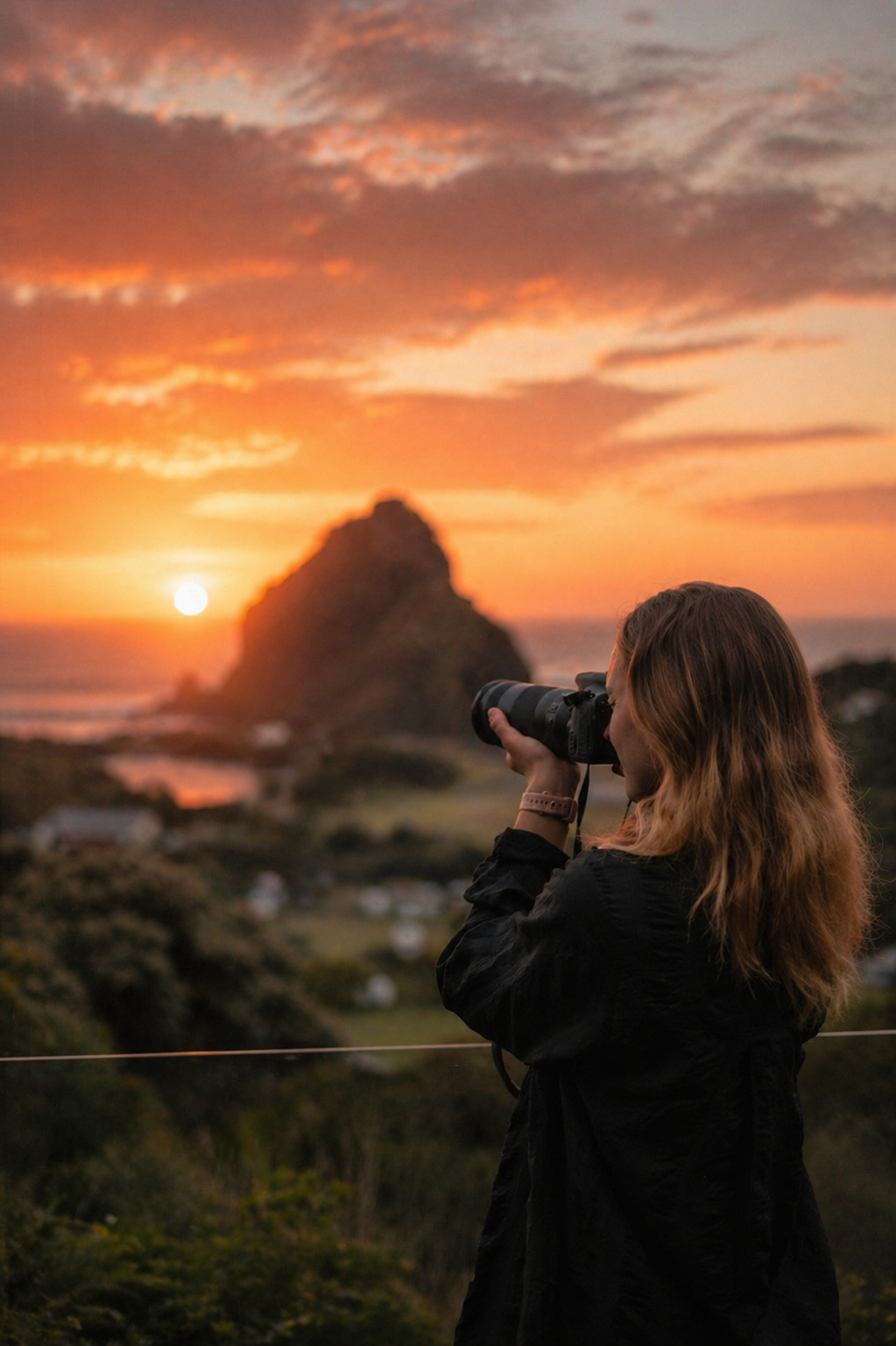
The most accessible viewpoint and the most popular. Lion Rock is in front of you and to the right; the open Tasman is straight ahead. Easy to reach from the carpark, easy to walk to from Surfside for an after-sunset meal, the obvious choice for first-time visitors.
❋ Piha, near the SLSC
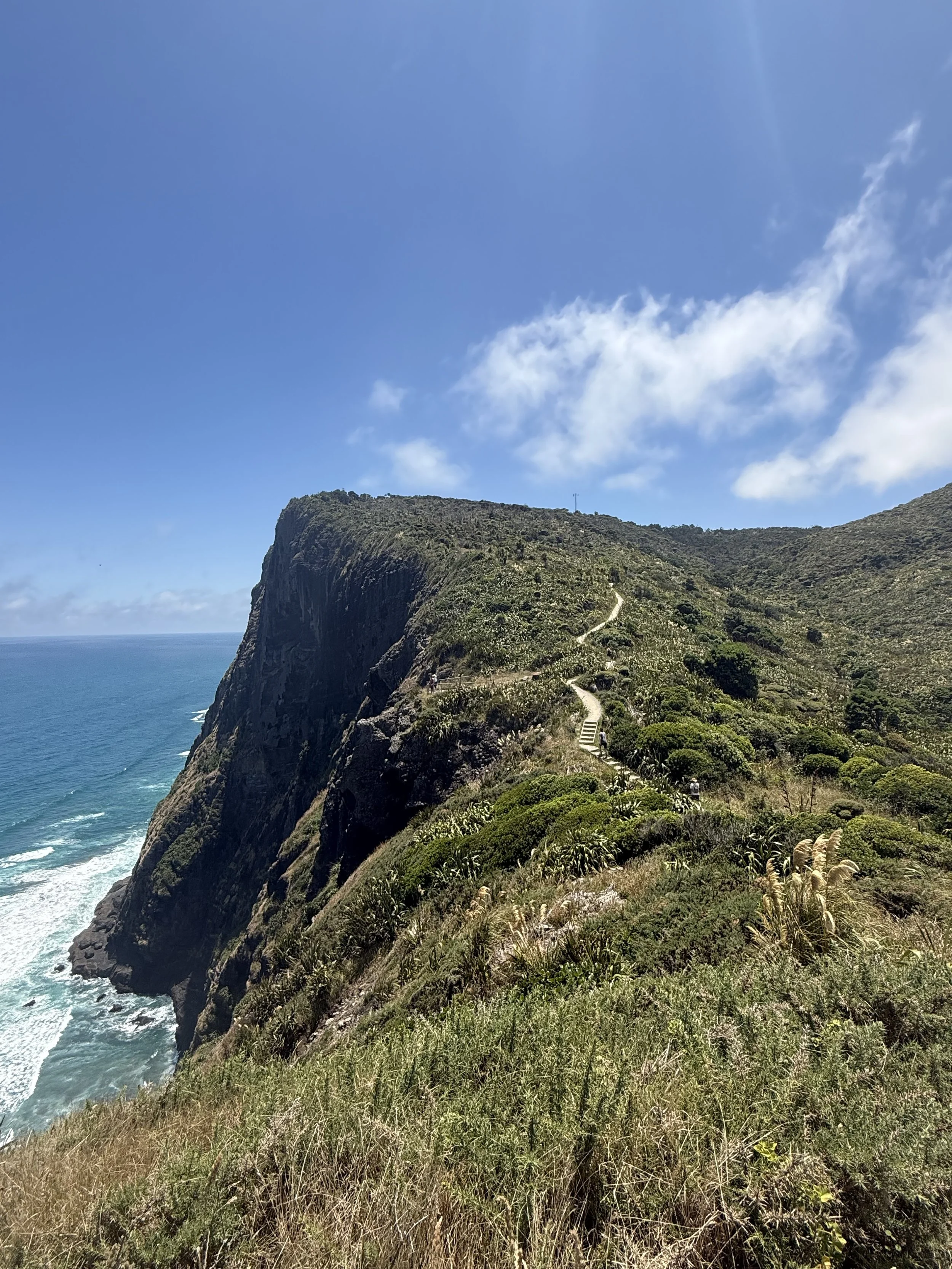
For visitors with another half-hour and the right shoes, the Mercer Bay clifftop gives you the entirely different version: the sunset from above, with the cliffs in the foreground and Piha laid out below. This is the version professional photographers come for. Worth doing once in your life if you visit Piha for more than a day. Allow time to walk back in the dark; bring a torch.
❋ The Mercer Bay.
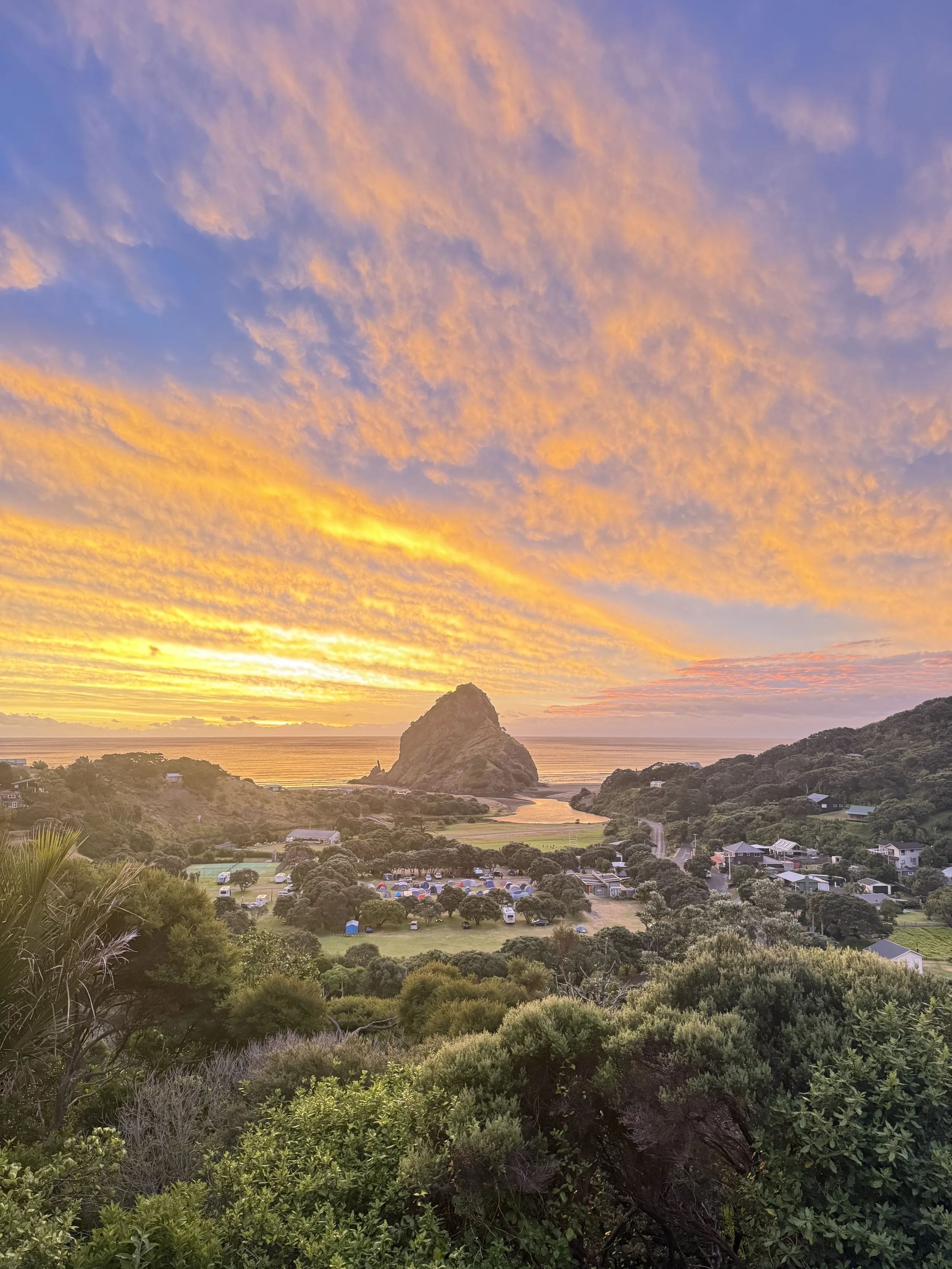
Less dramatic for the sunset itself but the best position for the after-sunset light show — the eastern cliffs and the bush turn pink and gold for about ten minutes after the sun is gone, and the view from The Domain catches that perfectly. If you've parked there or you're staying at the Domain Motor Camp, this is your seat.
❋ The Domain end.
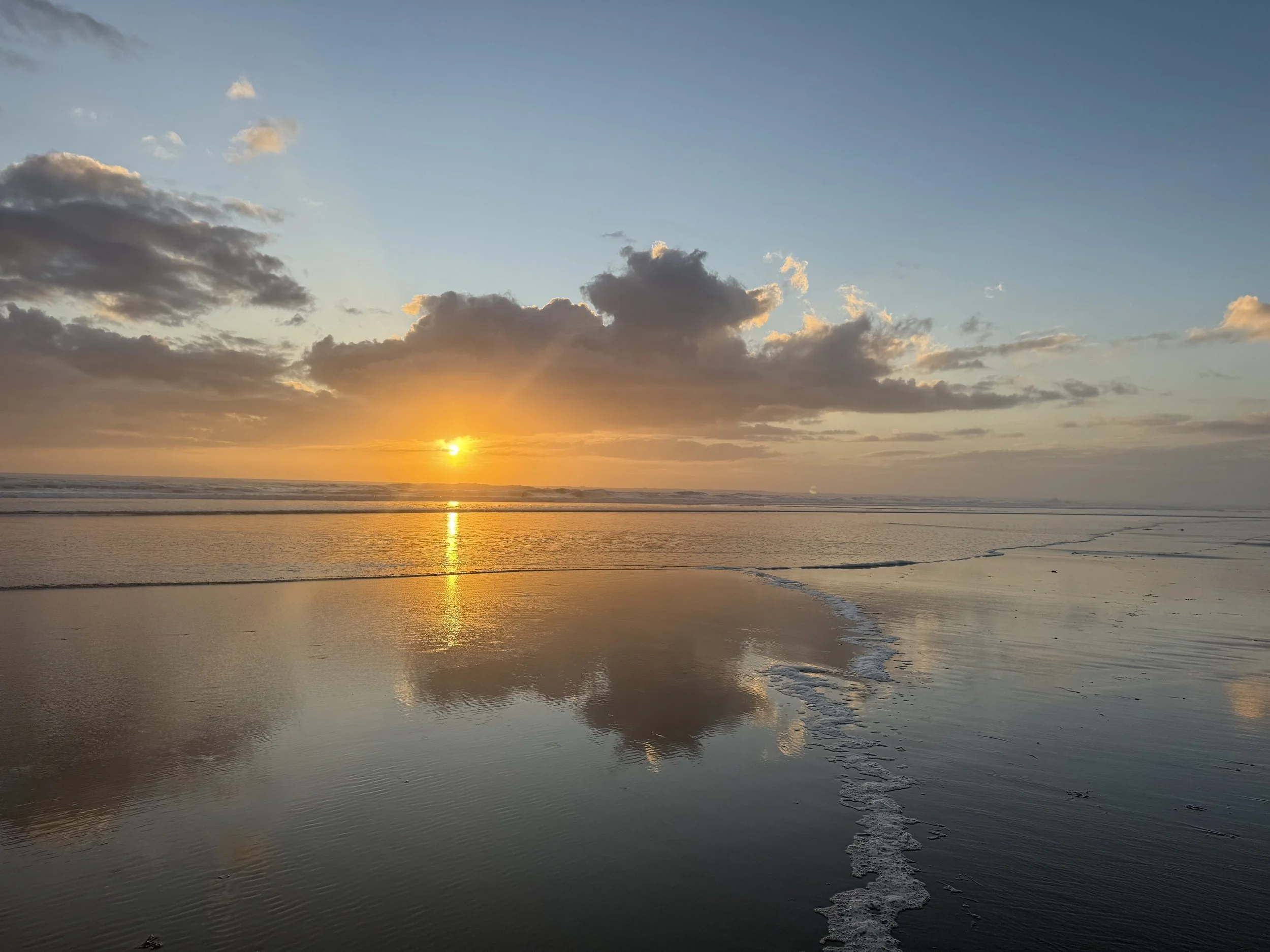
Walk down the sand from either carpark to a point where Lion Rock is to your right and the open ocean is straight ahead. The walking pulls you out of the carpark cluster and gives you a quieter version of the same sunset.
❋ Mid-Beach.
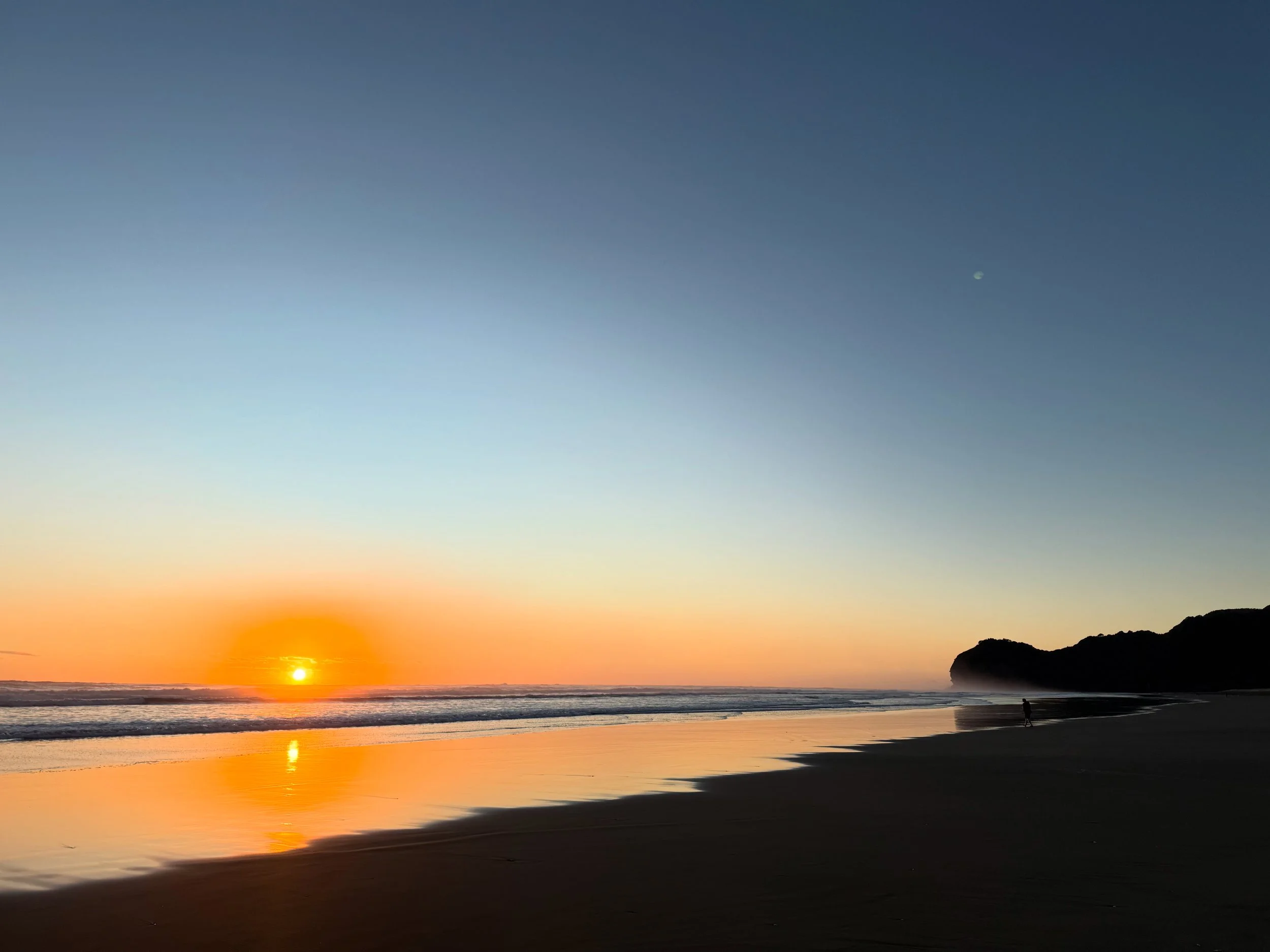
The angle on Lion Rock changes as you walk north — you start to see it from the side rather than the front, and the silhouette shape changes. The northern stretch is also the quieter end on most evenings. For visitors who want the sunset without the crowd, walk north.
❋ North Piha
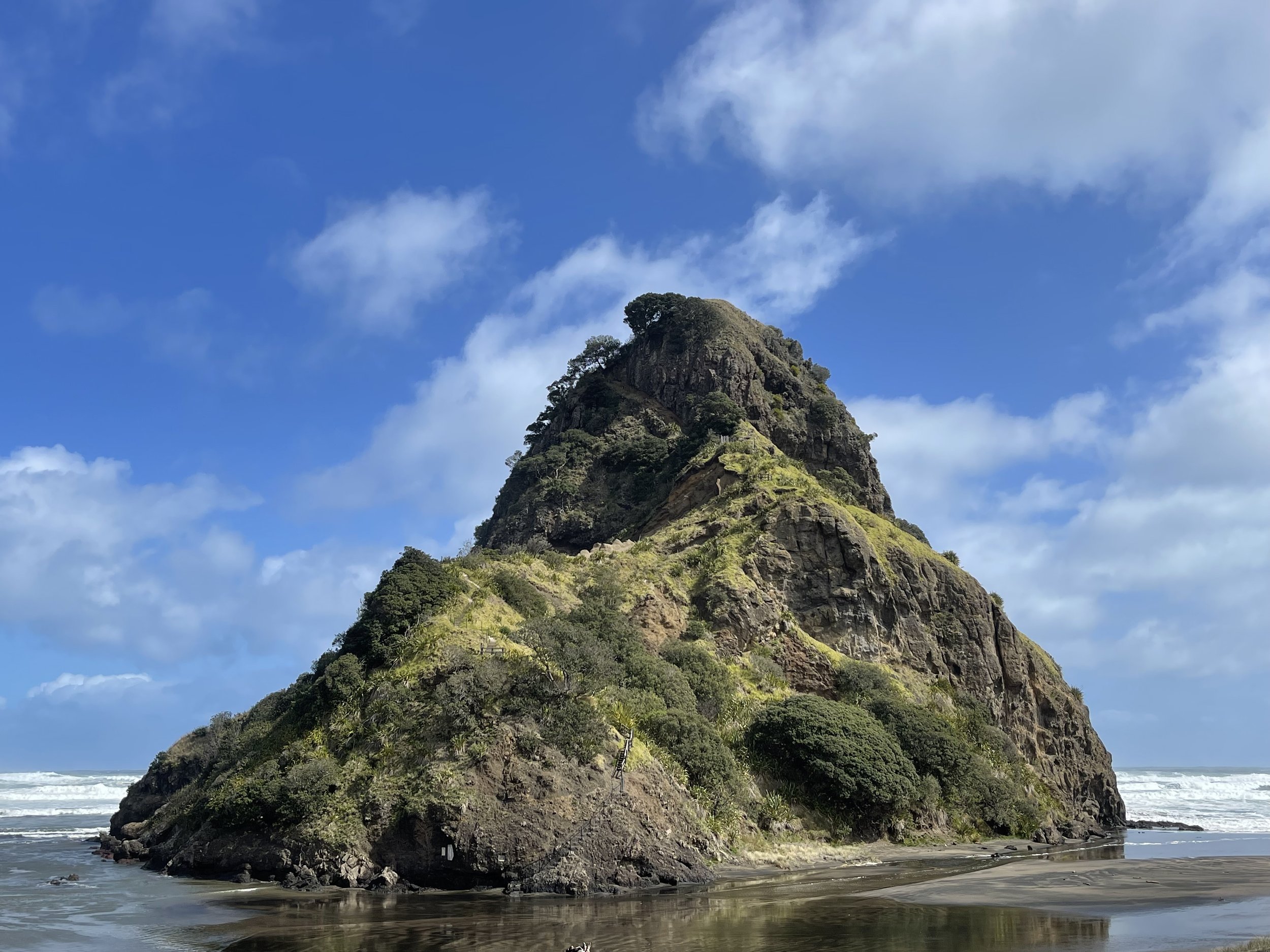
There is no longer an accessible walking track up Lion Rock and cannot be walked up. There are many ways to enjoy Lion Rock though - which is around and towards, rather than up!
❋ A note on Lion Rock itself.
How to prepare for a Piha sunset
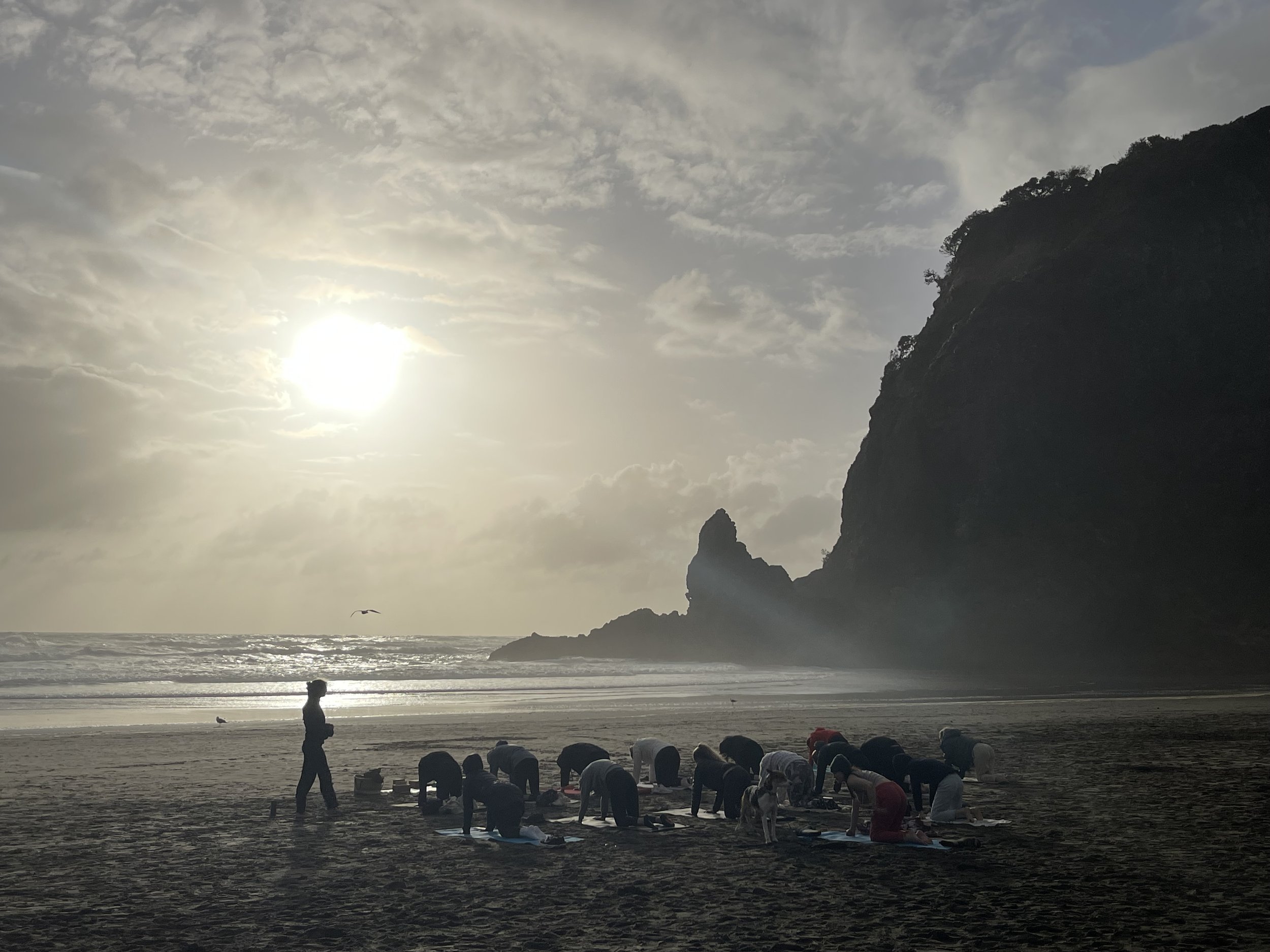
A few practical things the locals know:
The sky starts working about an hour before official sunset time — the warm colours, the changing cloud, the way the light hits the cliffs and the bush. Arriving at sunset itself is arriving for the last act. Arrive earlier and you watch the whole performance.
❋ Arrive an hour before.
The wind drops at sunset but the temperature drops with it. A summer sunset can need a jumper by the time the colour finishes; a winter one needs more.
❋ Bring layers.
In summer, dinner before sunset (5.30pm at the RSA or Surfside or CBD) and a long evening on the beach after. In winter, sunset first and dinner after at the same restaurants. Aryeh's deck is positioned for the sunset specifically — bookings well in advance for the prime weekends.
❋ Plan dinner around it.
This sounds obvious and it isn't. Take the photograph in the first ten minutes, then put the phone away. The sunset rewards being watched, not documented.
❋ Don't watch through the phone.
❋ Check the cloud forecast, not just the weather.
A clear sky gives you a clean sunset. Scattered cloud gives you a spectacular one. Heavy cloud gives you nothing. The forecast you want to read is the cloud cover one, not the rain probability.
This is the bit most visitors miss. After the sun goes below the horizon, the sky continues to colour for about thirty minutes — often the most intense colours of the entire evening happen in this window. The crowds leave at sunset; the people who stay get the version they didn't queue for.
❋ Stay for half an hour after.
❋ Photographers: arrive early, scout the position, then commit.
The best photograph isn't usually taken from where you ended up; it's taken from the position you chose deliberately twenty minutes earlier. Walk the beach with the light angle in mind before you set up. Most professional Piha sunset photography is taken from the southern end or from the Mercer Bay clifftops.
What the locals would tell you
Sunsets are why Piha is a stayover destination, not just a day trip.
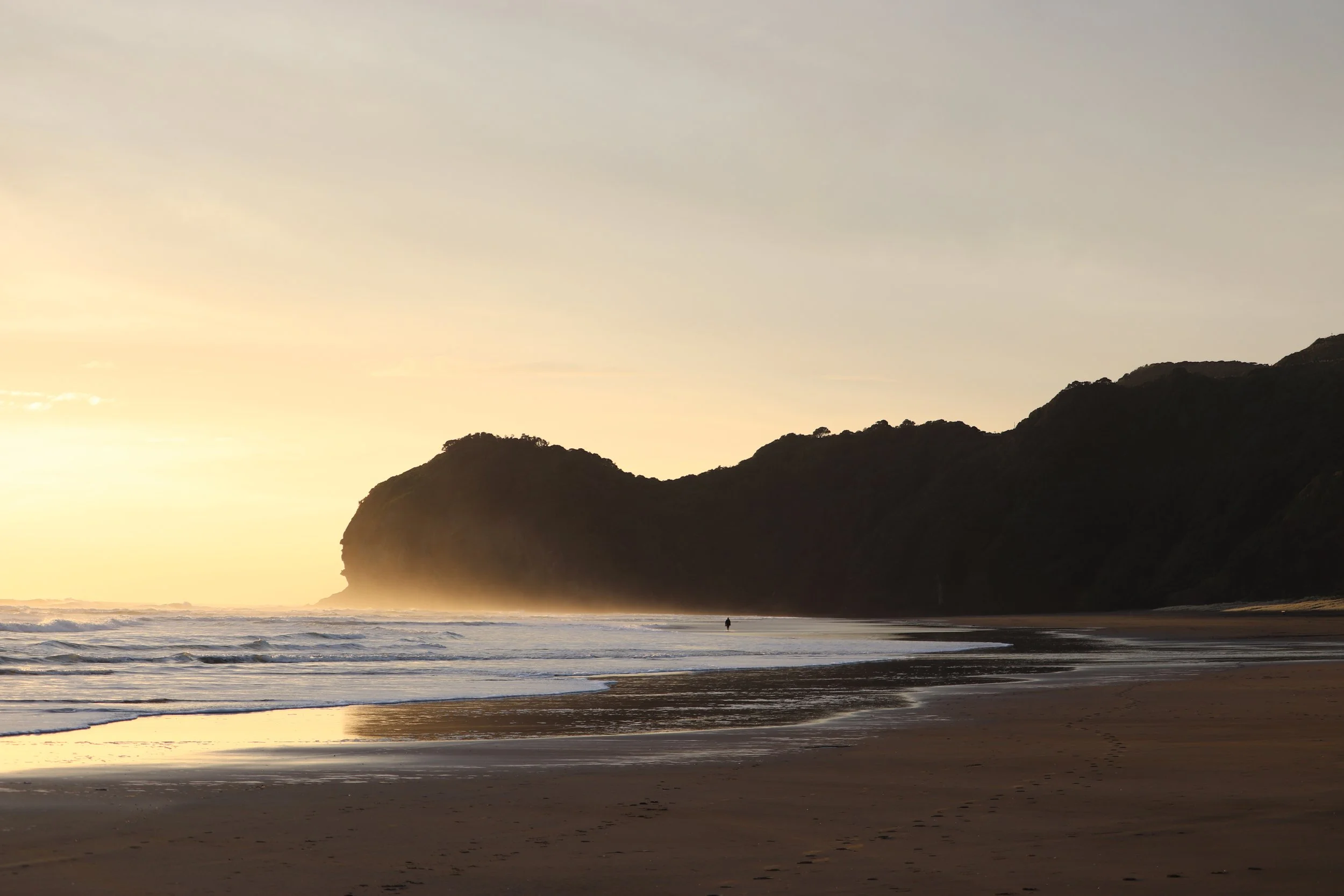
Day visitors arrive in the morning, do the beach, do a walk, eat lunch, and leave by mid-afternoon. They miss the thing that's quietly the most distinctive single experience the village offers. The visitors who stay overnight — at the campground, at Beachstay, at The Little Louise's, at any of the holiday houses — get to watch the sunset properly, sleep on the same beach, and be there for the morning light too.
The other thing worth saying clearly. Piha sunsets aren't just a sky show — they're a full environmental event. High contrast (black sand, gold light), structured (Lion Rock, the cliffs, the waves), dynamic (the weather and the surf moving constantly), and unrepeatable (no two evenings the same). Most beaches give you a sky. Piha gives you a composed scene that uses the whole landscape.
You don't have to stay overnight to see a Piha sunset. You should at least once.