More here than you might expect!
Approximately 900 permanent residents, alongside a large community of weekenders, surfers, artists, retirees, tradespeople, young families, and multi-generational locals
Around 45–60 minutes from Auckland CBD
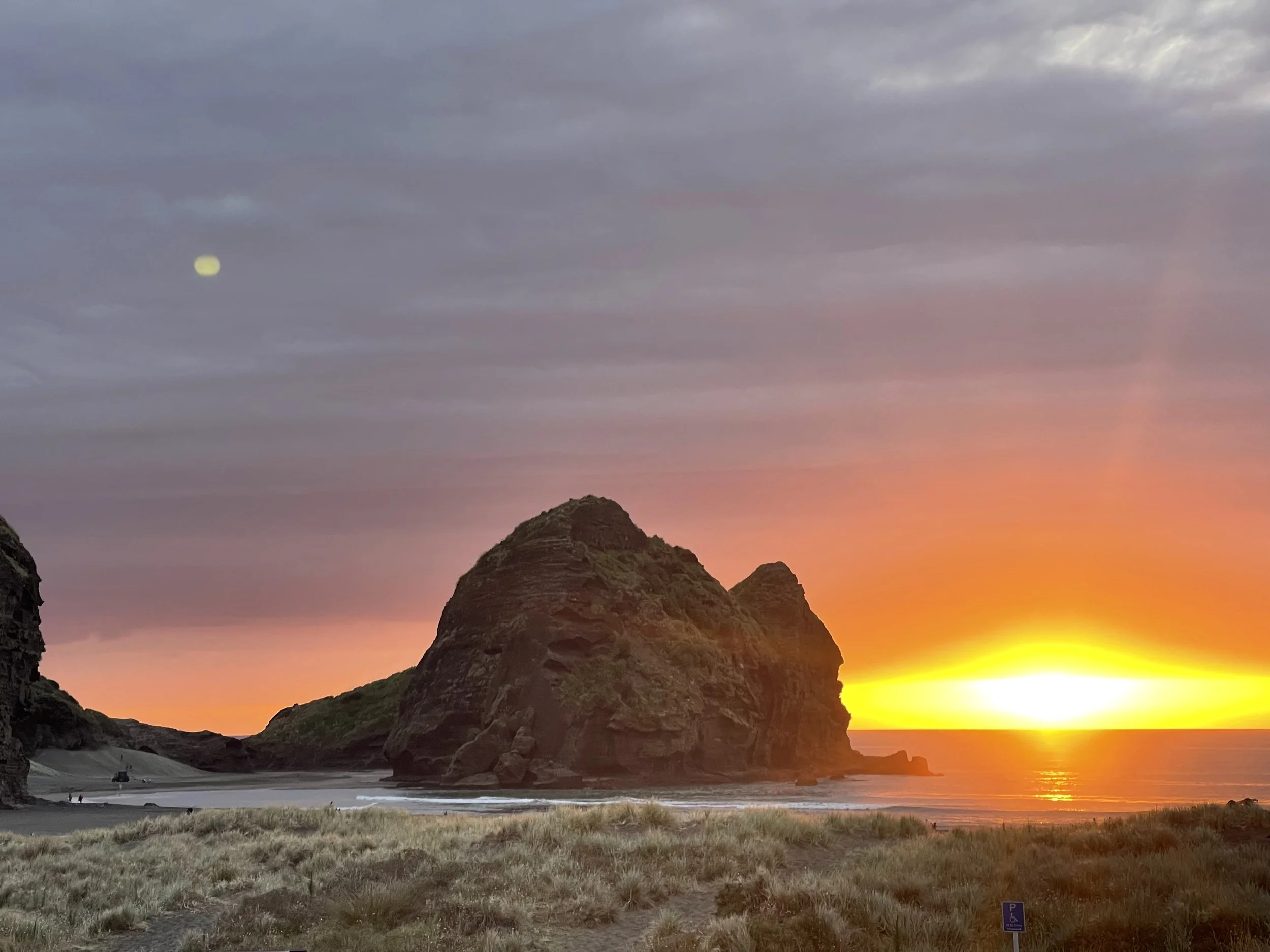
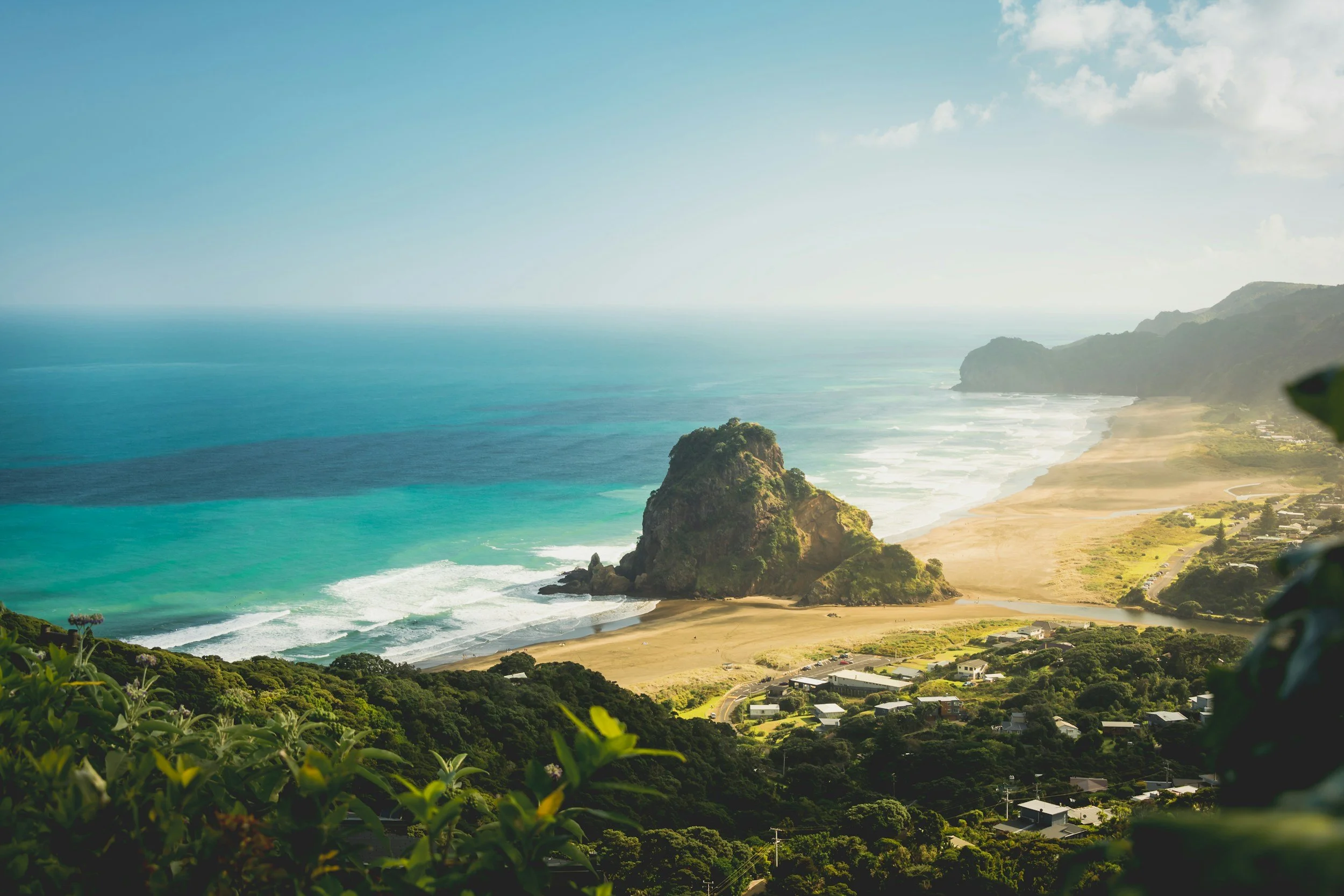
Famous for black sand beaches, surf culture, and the iconic Lion Rock. Popular for hiking, waterfalls, photography and sunsets
Surrounded by the native rainforest of the Waitākere Ranges
Widely regarded as New Zealand’s most iconic surf beach
Home to New Zealand’s first surf life saving club (est. 1934)
Strong village culture and deeply connected community spirit
4 restaurants and bistros
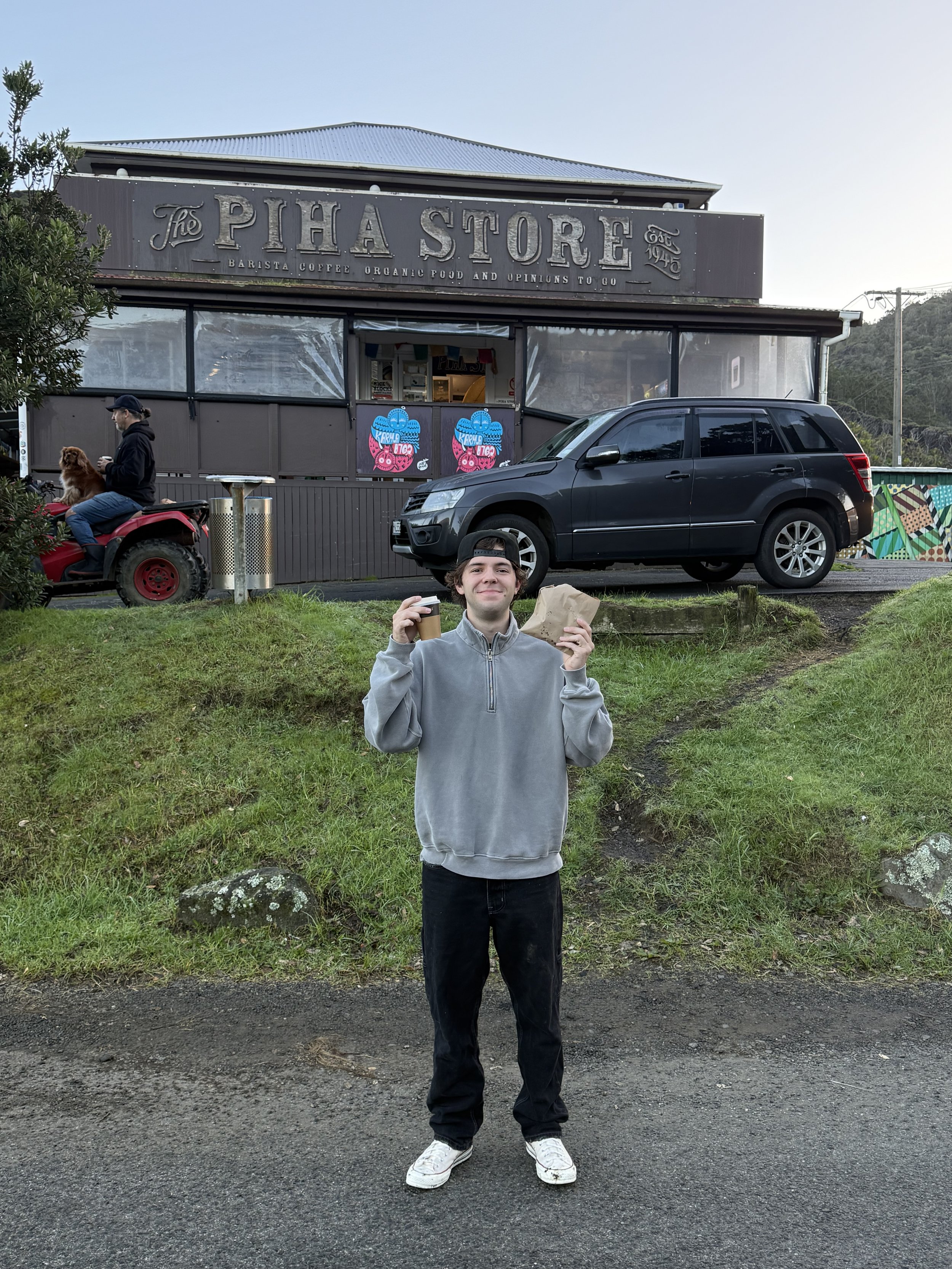
1 general store
1 seasonal food truck
2 ice cream stores
1 campground
Many short-stay accommodation providers
Holiday homes and classic Kiwi baches throughout the village
6 surf schools and operators
2 surf lifesaving clubs
1 horse trekking operator
1 local tour operator
Bowling club, tennis courts, yoga, beach fitness, massage, and wellness offerings
1 art gallery, 1 library, 1 community hall, and 1 post shop
1 kindergarten serving local families
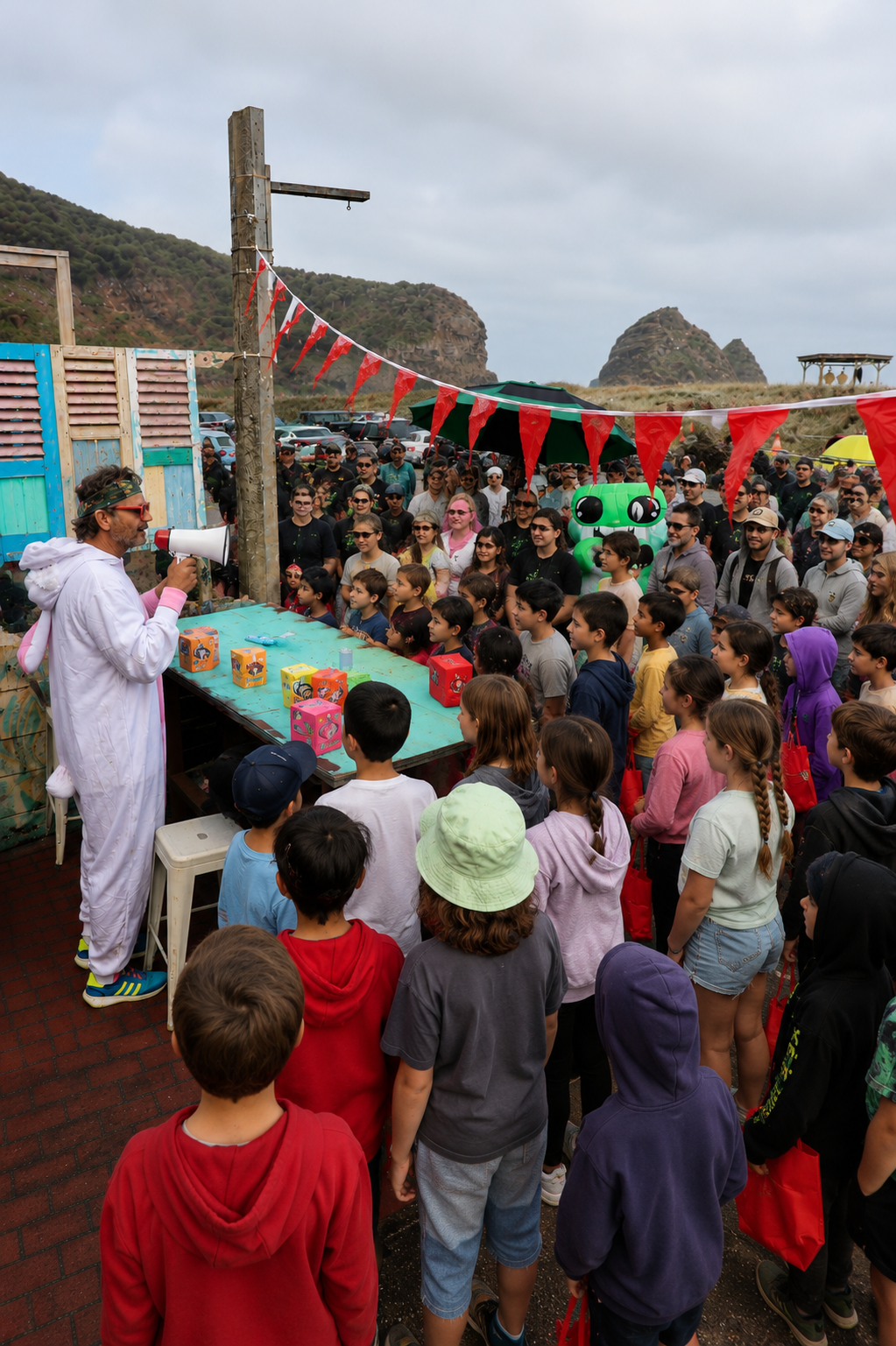
Matariki Festival (annually)
Feels remote and cinematic, yet remains close to New Zealand’s largest city
What makes Piha, Piha.
By Jenene Crossan
Piha isn't like anywhere else I've lived. The people who live here will tell you the same thing, usually within five minutes of meeting them.
It's like living with family. Not the kind where everyone's in each other's pockets - though plenty of people choose to be close knit. When a couple gets married in the community the whole place turns up. A fundraiser and we are all there (any excuse for a beverage and a chin wag). I see friends raising each other's kids, minding each other's dogs and holding each other through the hard bits.
But it's also more than that. It's not just a neighbour that you might nod towards on the way past.
It's the knowing that if you needed help, they'd be there. That you could wander into any of our little establishments, sit down with a group you don't really know, and have a proper conversation. It doesn't feel intimidating. It feels welcoming.
And yet - it's staunch.
Comforting Familiarity.
We have a population containing both full and part time people (those who live here permanently vs. those who weekend here whenever), meaning the depth of their interaction may change. What I’ve heard is that the feeling of community still exists even for those not here as often.
You can live around the periphery of Piha and still feel held by it. Just by walking along the beach and learning the dog's name. Usually you know the dog's name long before you know the human's.
We use them as markers. Oh yeah, that girl, you know, with Brewer. That's how I meet people all the time.
It can be a passerby. You might not know where in Piha they live, but you know they're at the beach at 7am every day. You know their ritual is a Friday beer at the bowler with those four people. You might stop and talk for ten minutes and never learn what they do for work.
The rhythm of Piha is the moments we come together inside it. That's how we connect.
Growing up together.
The community is getting younger. The tradies moved in and started young families. There's a kindergarten, so the little ones have a place to gather. They become friends there, then they get on the school bus together and head over the hill — and they keep doing that through their whole schooling life, even if they end up at different schools. They all start from the same place.
The school bus in the morning is one of my favourite things in Piha.
Before 8am, all the mums and dads are there — athletic tights, coffees in hand, beach fit or a surf to follow. They come from all the different little roads of Piha. Walking, biking, kids running ahead with bits and pieces in their hands. It's a shared little journey before the day properly begins.
They gather near the store. Dogs on leads, conversations already mid-flow. The bus pulls in. Kids of all ages get on, all going to different schools, but starting from the same place.
And then there's the wave.
Ten parents standing there, waving at the kids. And the kids wave back — not just at their own parents, but at everyone.
I've never seen that anywhere else. The bus pulls away, the parents head off — beach fit, surf, whatever's next — but they've had that moment together.
The gossip is mostly kind
Like any small town, there's gossip. But it's not what you'd expect. It's not nasty.
News travels fast and changes shape from ear to ear, of course. But just as often what I hear is have you heard they got that job? Or this is happening for them. There's a real sense of being excited for each other. Of being happy to hear what's going on.
That balance exists too.
A little bit fringe
A walk through our local Facebook communities is sort of hilarious. People have strong opinions. Some are mainstream, some are fringe, it's a real mixture.
We probably over-index a little on people who live further out from the norm. Which makes sense — by definition, anyone who's chosen to live a bit further away is probably slightly more risk-capable.
I love that there are multiple Piha community Facebook groups. People who, at some stage, broke away from the main group and decided to do it themselves. On face value, it's the most Piha thing there is. But it's also such a Kiwi thing — that I'll just do it myself then attitude. Not afraid to start something up and give it a try.
Ten parents standing there, waving at the kids. And the kids wave back — not just at their own parents, but at everyone.
I've never seen that anywhere else. The bus pulls away, the parents head off — beach fit, surf, whatever's next — but they've had that moment together.
Piha wasn't designed
Most Auckland suburbs were created as subdivisions. Streets put in, schools built, shops added, people invited to come live there. Even the ones that are seventy years old now started that way.
Piha didn't.
We still don't have footpaths. There's still ongoing debate about whether we ever should.
There's been a strong will here to protect the place. No high-rises. No big-format chains. There's a story I've heard a hundred times about a rumour that a McDonald's was coming and the community absolutely lost it. The place wouldn't cope. Even a café, at one point, set off a huge public reaction.
But there's also a real welcoming of entrepreneurship now. People are excited to see others bring their talents here and offer something new. Like coming to dinner with a fresh plate nobody's tried before. That's the sentiment I've been getting.
Intergenerational
There's a strong intergenerational thread running through Piha. I've met people in their 80s who have been coming here since they were babies. There are houses — sometimes just old shacks, traditional Kiwi baches — that have been passed down through families. Some probably wouldn't meet today's consent standards, but they've been held onto and reshaped over time.
There's a bit of turnover now. Those places are being passed on, and the next generation doesn't always want to keep them. Costs are higher. Connection might be different. So new people come in.
That's a good thing. It's good to see a place evolve.
Land and sea
There's a shared love of land and sea here. Of nature. Of connecting to it.
It attracts a certain kind of person — people who know, intrinsically, that they need it. That it gives them stability of mind and soul.
There's also a real pattern in the work people do. We've got a huge number of people connected to the film industry, off the back of West Auckland's explosion of studios over the last twenty years. People realised they could live at the beach and commute. So now you've got Oscars and Emmys out here. World-class directors, actors, writers. Artists, photographers, painters, set designers.
The heroes
And then you've got the heroes. The people who literally put themselves in harm's way to save others.
Most of the people who get into trouble here aren't locals. They've come because they've seen the pictures. They want to capture the view, or experience something. Often they've never swum at a beach before — let alone a wild West Coast one.
And sadly, that's where things can go wrong.
What I see is the lengths this community goes to in trying to save those lives. The time, the money, the heart. It gives you a strong sense of the value of life here. People come to Piha at pivotal moments. Sometimes to celebrate, sometimes to end something, sometimes to just feel something. That comes with a weight.
What surfers know
That relationship with the ocean shapes people in quieter ways too. Especially the people who surf.
If you can learn to surf Piha, you can surf anywhere in the world. It's not an easy place to start. The ocean doesn't hand anything to you.
Surfers here are taking on an enormous challenge of themselves to do something very difficult that comes inevitably with some kind of pain. The trade-off is the exhilaration of when they get it right. But it's the pursuit that anchors them. They keep coming back because they know the feeling it can give them, and they trust in that feeling.
It's good for mental health, for clarity, for stability, for routine.
There's a steadfastness in the people who surf. They're not what you might imagine — not reckless or chaotic. The religious surfers, the ones who go all year no matter the coldness of the water because that's where they come back to themselves — they are the most real, most reliable, most dependable, most giving and selfless people I have met. Not just in Piha. Anywhere.
What staunch actually means
For me, that ties back to what staunch means here. It's not about being hard. It's about being capable. About being able to show up. To help.
We saw it during the cyclone. The community came together at the surf club. We told people to empty their freezers — don't let the food rot. Bring it in, cook it, share it.
That week was probably one of the most exhausting of my life. It also filled my cup in the most incredible way. It reminded me what humanity looks like.
From that point, I knew Piha was the place to live.
Tūrangawaewae
I often tell the story of when I realised Piha was my tūrangawaewae.
It was a really ordinary, grey Auckland day. I was walking along the beach with my Labrador when the sun broke through. And I had this moment come through me so strong I tried to imprint it.
I remember thinking — I can feel the warmth of the sun on my hair. The taste of salt on my lips. The sand on my skin. I could see my dog in the water. I could see the beach was empty. I could see my home.
But what I realised was that it wasn't about the house. It was about how I felt inside myself. I felt settled. I felt complete. And I also knew it might be fleeting — that it might change again — but I had recognised it.
After chasing it my whole life, I knew what home felt like inside my own heart.
I wrote it down that day. Later, by coincidence, someone introduced me to the concept of tūrangawaewae — a place to stand.
That was it. That was mine.
Request a Custom Itinerary
Submit the inquiry form to initiate a consultation; a travel specialist will respond promptly to demonstrate how these solutions enhance your next journey.