Water Safety.
How to read this beach, what to actually worry about, and how to enjoy the water with confidence. From the locals who know it best.
Piha is one of the most spectacular beaches in Aotearoa. It's wild, powerful, beautiful and deeply loved by the people who call it home.
It's also a beach that deserves respect.
The good news is that enjoying Piha safely isn't complicated. Most of the risks people encounter here are visible, predictable, and manageable once you understand how the beach works.
This page is the locals' guide to water safety at Piha. It's written by people who live here, work in the village's water safety programmes, and have spent years watching what catches visitors out. The aim isn't to scare you, and it isn't to downplay the risks. It's simply to give you the knowledge that locals, lifeguards and regular beach users rely on every day.
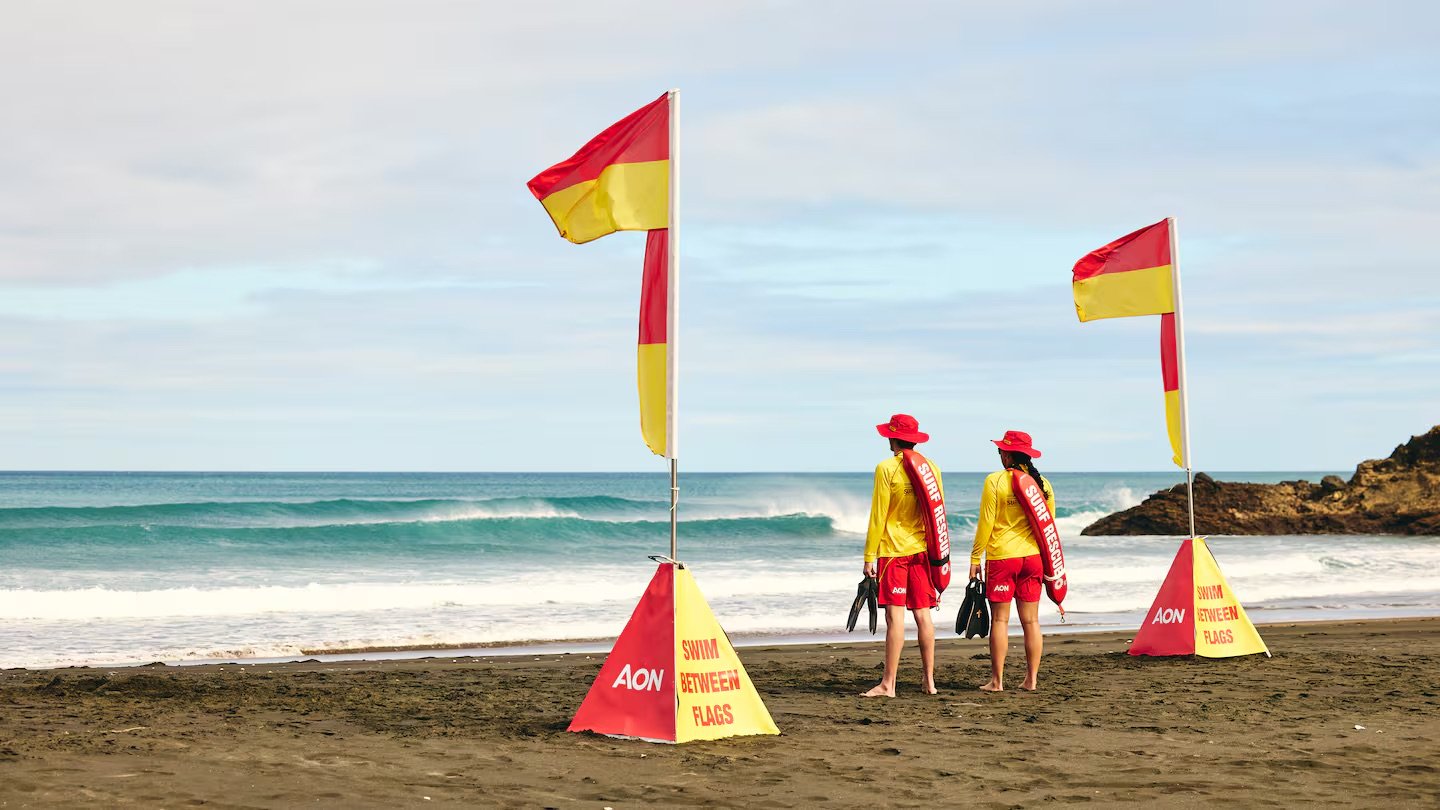
Swim between the flags. Always.
The flagged area is where trained lifeguards have already assessed the conditions and identified the safest place to enter the water that day. Those flags move because the beach changes. A spot that was safe yesterday may not be safe today.
If there are no flags, there is no patrol. That doesn't automatically mean the beach is unsafe, but it does mean you no longer have the benefit of local knowledge watching over the water.
Everything else on this page explains why that simple rule matters so much.
The five things visitors get wrong
Most people who get into difficulty at Piha aren't taking huge risks. They're usually making one of a handful of common mistakes — all of which are avoidable once you know what to look for.
1. Swimming outside the flags
The flags mark the safest stretch of beach for the conditions on that particular day. They move — sometimes daily, sometimes hourly — because the rips move.
One of the most common mistakes visitors make is walking further along the beach because it looks quieter. Often, the reason it's quieter is because lifeguards have already determined it isn't the safest place to swim.
The “no swimming” sign is put up when the local surf clubs have accessed the situation and closed the beach for a very good reason. It signifies that the conditions are particularly dangerous today. The means don’t swim. Sometimes they won’t even put flags out to swim between, simply because it is too dangerous.
2. Underestimating rips
A rip often looks calm. That's the trap.
Rips are powerful currents flowing away from the beach, usually appearing as darker, smoother patches of water with fewer breaking waves. To an inexperienced eye, that calm patch can look inviting. To a lifeguard, it's exactly where they would avoid swimming.
The smoother the water looks, the more attention you should pay to what it's actually doing.
Tip: Also watch out for larger set waves. This is when a regular group of larger, more powerful waves can arrive in clusters. How regularly a group of larger set waves arrives can change on any given day, depending on the swell size and ocean wind conditions.
3. Letting children play near rips
Children don't need to be swimming to get into trouble.
A child playing knee-deep in water beside a rip on an outgoing tide can be knocked off their feet and pulled into deeper water within seconds.
This is one of the situations locals and lifeguards see most often — families enjoying a day at the beach without realising that a seemingly harmless patch of shallow water sits beside a powerful current.
Stay close to children when the waves are very large to ensure that they are plenty far back from the water line.
4. Fishing from rocks in rough conditions
Rock fishing is a different category of risk entirely.
Rogue waves around Lion Rock, the south end of the beach, and sections of the coastline have claimed lives over the years. If you're fishing from rocks during large surf, you're exposed.
Wear a lifejacket. Stay well back from the edge where possible. Never turn your back on the ocean.
5. Mixing alcohol and surf
It sounds obvious, but it remains a factor in many incidents.Alcohol slows reaction times, affects judgement and reduces your ability to respond when conditions change. Combined with strong currents and heavy surf, it creates unnecessary risk. Piha and alcohol are rarely a good combination when water is involved.
This is when people tend to make the mistake of swimming in their jeans or other inappropriate garments. Long items made of lots of fabric can get caught up and bowl you over or can get heavy when wet.
What makes Piha different?
Understanding why Piha behaves differently from many other beaches helps explain why local knowledge matters. The danger isn't random. It comes from a specific combination of geography, swell and constantly changing conditions.
It's an exposed west coast beach
Piha faces directly into the Tasman Sea and receives ocean swell almost continuously. Even on calmer days, there is usually more energy in the water than visitors expect.
Beware the surge on big surf days. An unexpected much larger wave can come in quickly and takes over more the beach than usual. These happen particularly when surf size is large meaning large, heavy volumes of water are moving. These can come in quickly and knock you, your children or your pets off their feet.
The rips are powerful and concentrated
Piha stretches for around three kilometres, with Lion Rock sitting roughly in the middle.
While rips can form anywhere, they commonly develop around the stream mouth at North Piha, near Lion Rock, and around the southern end of the beach. Learning where these areas are and paying attention to the day's flagged zones makes a significant difference to your safety.
Conditions change quickly
A beach that feels calm at 9am may look completely different by lunchtime.
Tides, swell direction, wind and wave height constantly reshape the beach and move the rips. That's why lifeguards reassess conditions every day and reposition the flags when necessary.
There is no long shallow shelf
Unlike some beaches where you can wade out gradually, Piha tends to deepen quickly. Water that feels manageable one moment can become much deeper only a few steps later.
The water is harder to read
Piha's black volcanic sand makes the water darker than many people are used to. Depth changes, currents and underwater features are often harder to see from the surface.
None of this means Piha is unsafe. It simply means it requires more attention and respect than a sheltered harbour beach.
How to enjoy Piha safely
For swimmers
Swim between the flags. Always.
If there are no flags, think carefully before entering the water. Enjoy a beach walk, explore the rock pools, or save your swim for a patrolled day.
Watch the ocean for at least ten minutes before entering. You'll learn a lot about the waves, currents and conditions simply by observing.
If you get caught in a rip, don't panic and don't fight it. Stay calm, float, signal for help by raising an arm, and swim parallel to the beach once you are able to move out of the current.
Lifeguard patrols generally operate on weekends and public holidays during summer, as well as throughout statutory school holiday periods. Patrol hours are typically 10am–5pm.
The Piha Surf Life Saving Club patrols the southern end of the beach, while United North Piha Lifeguard Service patrols the northern end.
For families with children
Stay within the flagged area, even for paddling and shallow play.
Keep children within arm's reach around moving water.
Be particularly cautious near Lion Rock during low tide and outgoing tides, where strong rips can form.
If you're spending the day with young children, the patrolled southern end of the beach is generally the best place to be.
For families wanting calmer swimming options, the Blue Pools and the swimming hole at Kitekite Falls can be good alternatives. Both have their own hazards, including cold water, slippery rocks and changing conditions, but neither carries the same rip-current risk as the open beach.
For rock fishers
Wear a lifejacket.
Check conditions before heading onto the rocks.
Never turn your back on the sea.
Avoid fishing during large swells.
Tell someone where you're going and when you expect to return.
For surfers
The same currents that move swimmers around the beach also affect surfers.
Take time to study the water before paddling out. Identify the rips, understand how they're moving, and respect the conditions. If you're new to surfing west coast beaches, consider taking a lesson and seeking local advice before entering the water.
Piha rewards experience and preparation.
What the lifeguards want you to know
Two volunteer organisations help keep people safe at Piha.
The Piha Surf Life Saving Club patrols the southern end of the beach. Founded in 1934, it was New Zealand's first surf life saving club and continues to train future generations of lifeguards through its volunteer programmes and junior surf initiatives.
The United North Piha Lifeguard Service patrols the northern end of the beach, providing the same vital service for North Piha visitors and water users.
Both organisations rely heavily on volunteers, community support and donations. The equipment, training and rescue capability that visitors rely on every summer are made possible by people who give their time freely.
If you've enjoyed Piha and would like to support the people who help keep it safe, donating to either organisation is one of the most direct ways to contribute.
A note from the village
Sometimes somebody who lives locally may walk over to visitors on the beach for a quiet conversation. They do this because they’re watching something play out that they’ve seen many times before and they want you to keep playing safely.
Most visitors who get into trouble aren't taking big risks. They're doing what families do on beaches everywhere: paddling, swimming, playing, exploring. The difference is that Piha isn't like every other beach.
The message from the village has never been "don't come" or "be afraid." It's the opposite. We love sharing this place. We want you to swim, surf, explore, climb the dunes, walk the beach, and make memories here. We simply ask that you give the ocean the respect it deserves.
The people in red and yellow aren't there because Piha is dangerous. They're there because Piha is powerful. Their job, and ours as locals, is to help you enjoy that power safely.
Five minutes spent reading this page may be the most valuable part of your visit.
It's a small investment that helps keep you, your family, and the people who might one day need to rescue you, safe.