
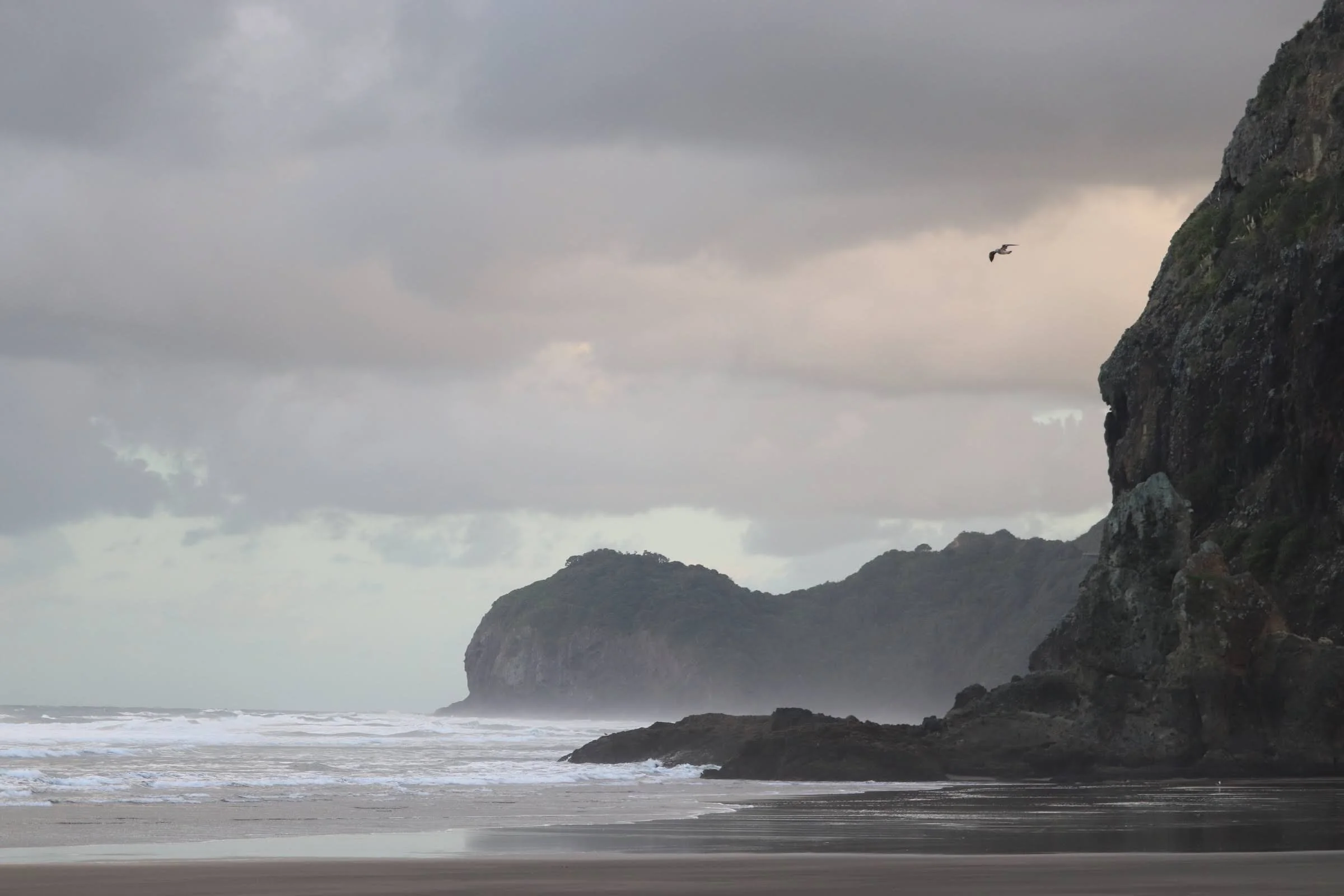
Plan your Piha visit.
Everything you need to know before you drive out. Honest, current, and written by people who go.
Piha is a 40 to 50 minute drive west of central Auckland, depending on traffic and the road. There's no public transport that gets you there. You can't fill up with petrol once you arrive. The water is genuinely dangerous and you only swim between the flags. Beyond that, it's one of the great drives out of the city, and worth the effort.
If you have ten minutes, read the rest of this page. If you have one minute, the things that matter most are: fill up before you leave, swim only between the flags, and don't underestimate the road.
Getting There
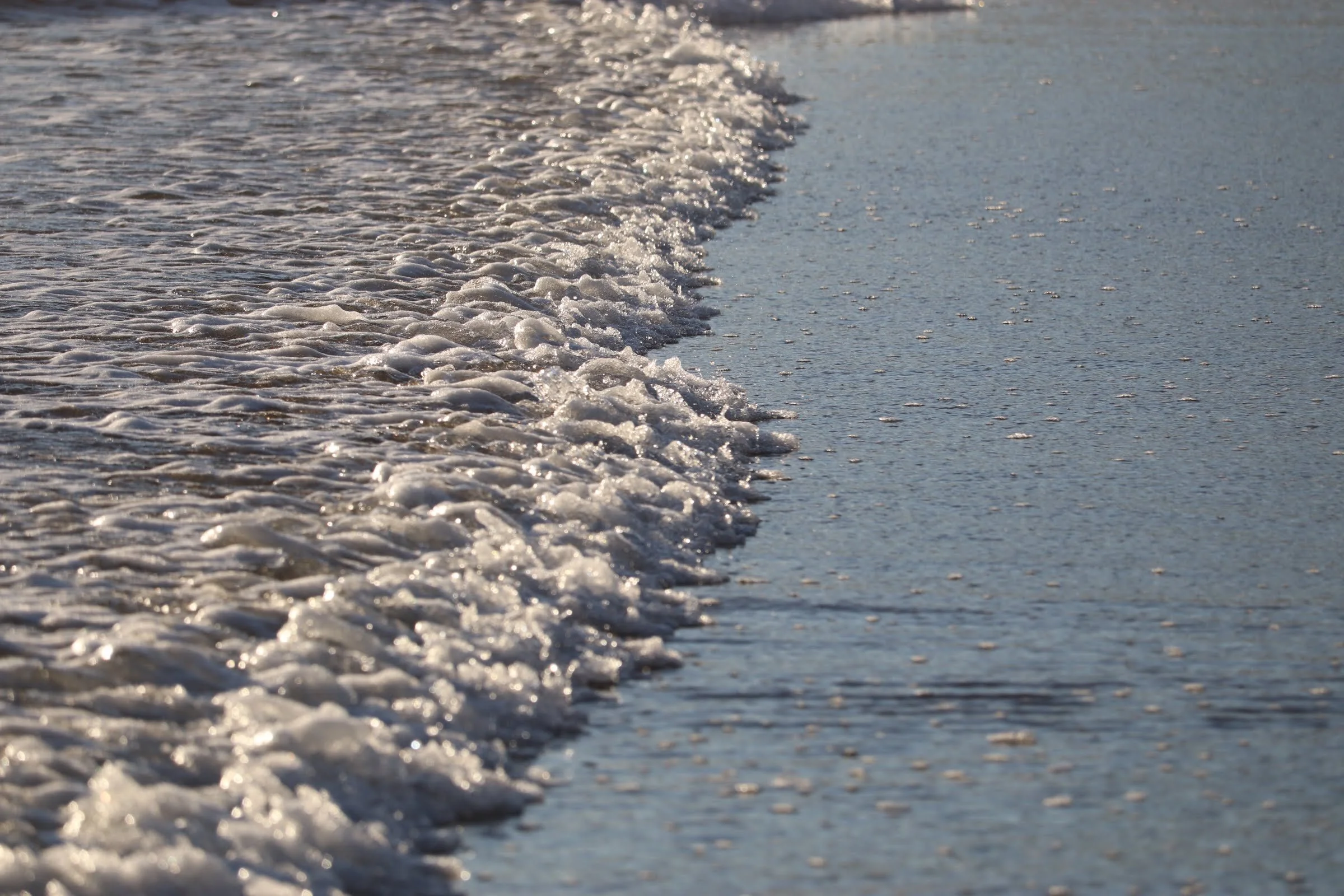
The standard route is west on State Highway 16, then south at Waitākere onto Scenic Drive, then west again on Piha Road over the ranges. Forty minutes if the roads are clear, fifty if they aren't. Allow an hour in summer weekends or after rain.
❋ From central Auckland.
There is no public transport to Piha. There are private shuttle services. For most visitors, you need a car.
❋ By bus or train.
Don't take an Uber out unless you've already arranged your ride back. Drivers will drop off in Piha and then leave — they aren't going to wait around in a village with patchy signal hoping for a return fare, and you'll find yourself stranded. If Uber is your plan, book a return taxi separately before you leave the city.
❋ Rideshares.
Piha Road is sealed but narrow, winding, and steep in places. It's not a difficult drive if you're paying attention, but it's not a road for hurrying. Locals will be behind you if you're slow; pull over at the marked bays and let them past. If you get carsick, sit in the front and don't read your phone.
❋ The road itself.
We don't recommend it. The roads up and over the ranges are too narrow for cars to pass cyclists comfortably, and on a busy summer weekend you'll create real traffic problems and put yourself in real danger.
❋ By bike.
The local answer is Piha Rides, run by Angela Power, who organises private taxi service to and from Piha. Call or text +64 21 137 1901. Worth knowing about even if you've driven yourself, in case of car trouble or a change of plans.
❋ Taxi and private transfer.
❋ Guided day tours.
If you'd rather not drive at all, Bush & Beach run guided day tours out to the West Coast from central Auckland that include Piha. A good option for first-time visitors who want context with their visit, or for anyone who doesn't fancy the road.
Parking
There are three carparks, all free, all within walking distance of the beach.
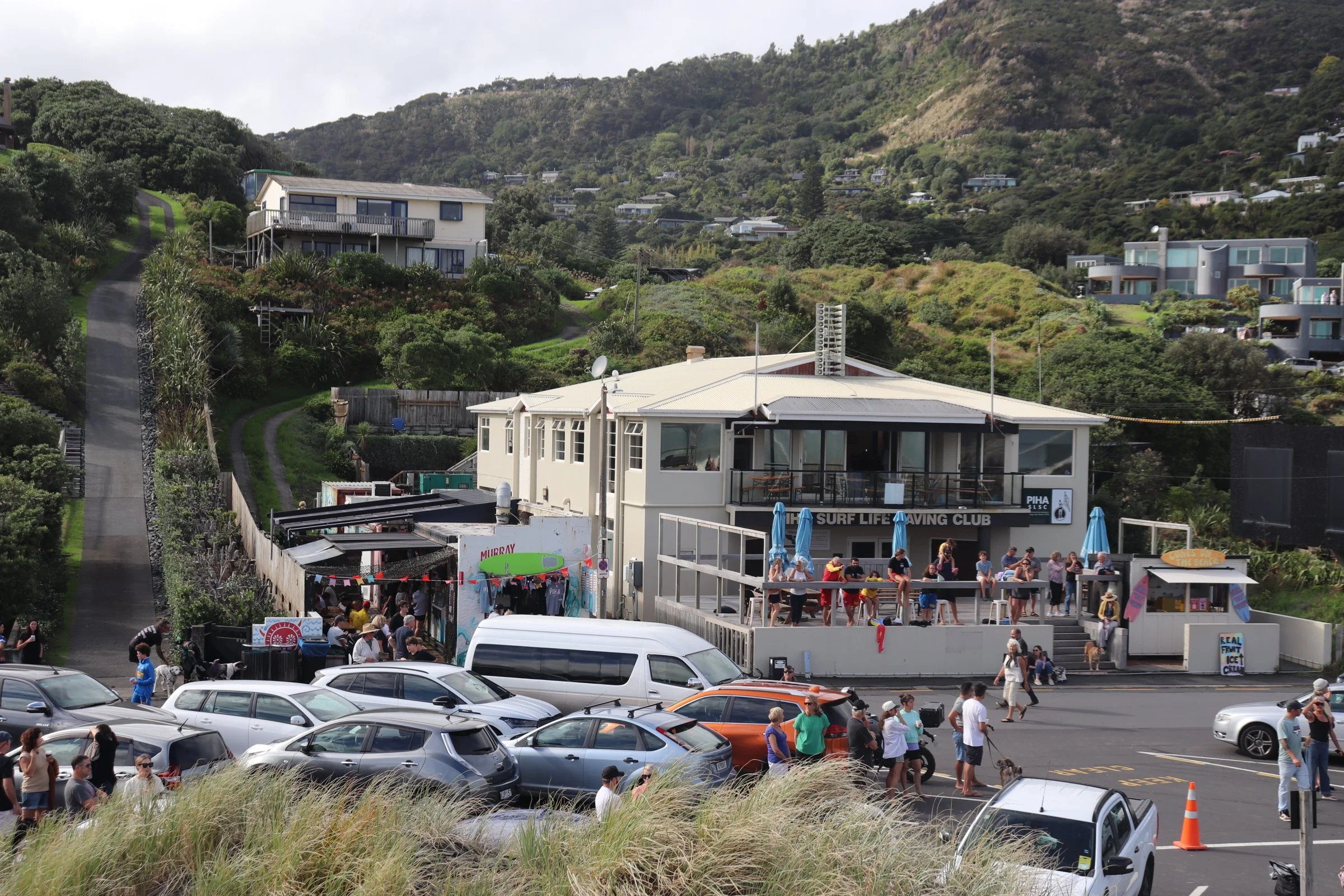
❋ Piha Carpark.
This the larger of the two main carparks, closest to the surf club, the café, and the main beach access at Marine Parade. This is where most visitors park.
❋ North Piha Carpark.
North Piha carpark sits at the north end of the beach, closest to the United Surf Club and the northern stretch. Smaller, fills first on busy days.
❋ The Domain.
When Piha and North Piha are full — and on a hot summer weekend, they will be — head for The Domain at 21 Seaview Road. It's a large grassed parking area next to the Piha Bowling Club ("The Bowler"), accessed from Marine Parade. From there you can walk over the eel bridge to the south side of the beach. It's the local move when the village is at capacity, and the walk over the bridge is a small piece of Piha character in itself. Bonus: The Bowler is open year-round and houses Coastal Beach Diner, so this is also where you end up after the beach. See where to eat and things to do.
❋ A note on valuables.
Car break-ins do happen at Piha, particularly in summer. Don't leave anything visible. If you're surfing or hiking and need to leave gear in the car, put it in the boot before you arrive, not in the carpark.
In summer, on a hot weekend, both main carparks fill by mid-morning. If you arrive after 11am on a January Saturday, head straight for The Domain. If The Domain is also full, you'll be parking on the road and walking. If you can come early or come midweek, do.
There's also limited roadside parking through the village. Mind the residential driveways — locals deal with a lot of inconsiderate parking and the council does enforce.
When to Come
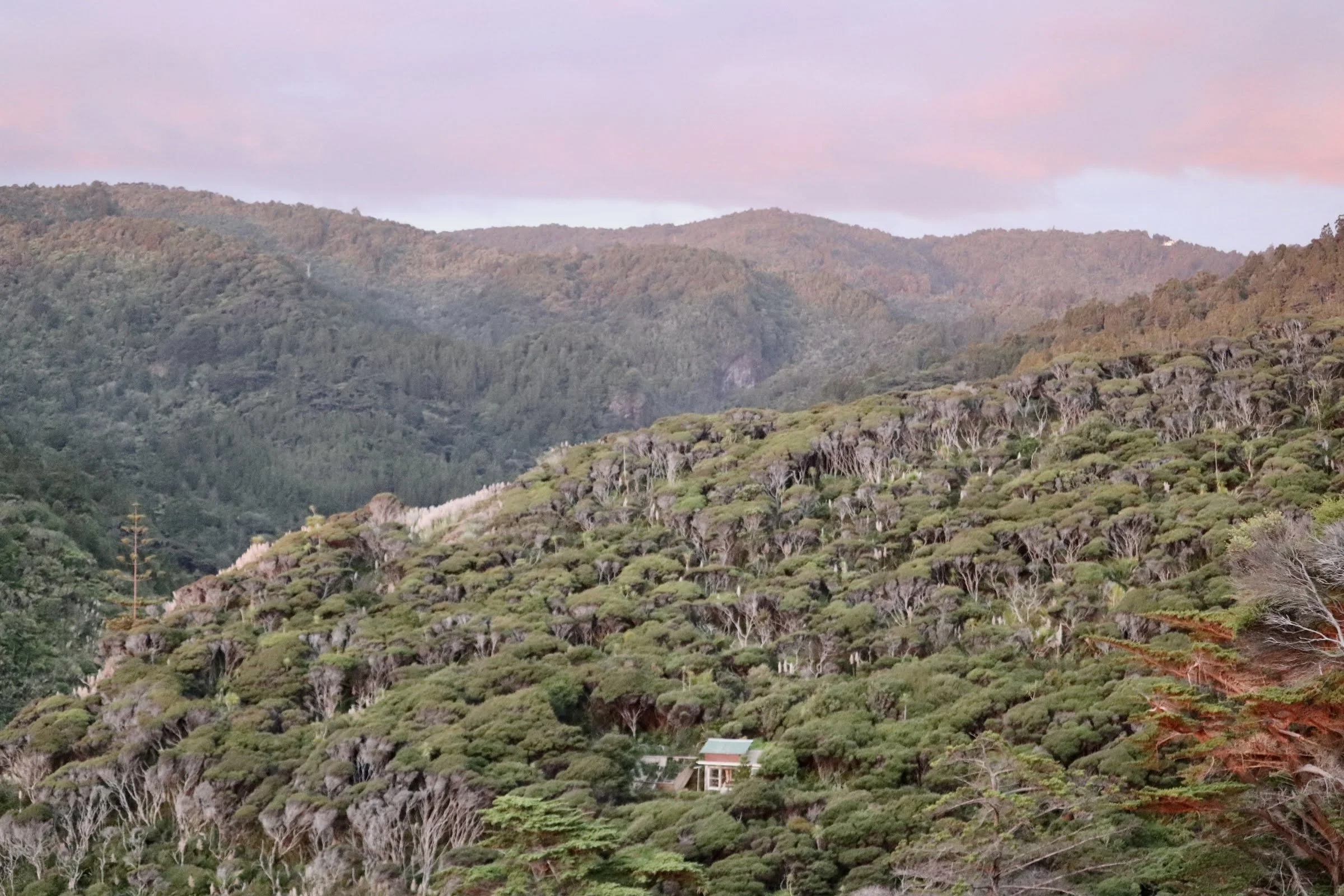
Great year-round.
Warmest, busiest, lifeguards on patrol, the beach at its most populated. Go early or stay late. Midday in January is hot black sand, full carparks, and shoulder-to-shoulder at the South Piha café. Mornings before 10am are spectacular.
❋ Summer (December–February).
The version of Piha most visitors miss. Storms come through and the surf is dramatic. The village is quiet. Some businesses run reduced hours. The walks are wet and worth it. Bring layers and waterproofs and don't expect to swim.
❋ Winter (June–August).
Sunrise on the beach is unmatched and you'll often have it almost to yourself. Mid-morning to early afternoon is busiest in summer. Late afternoon, when the light angles in across the cliffs, is when the place looks most like its photographs. Sunset behind the Tasman is the obvious draw and the carpark stays full for it.
❋ Time of day matters as much as time of year.
Arguably the best of it. Warm enough to swim, light at its softest, the crowds gone. Surfers know this; this is when serious swell starts arriving. Walks are at their best.
❋ Autumn (March–May).
Variable. Can be glorious; can be wet and windy. Lifeguards return in late October. Walks are at their greenest. Good for visitors who don't mind weather.
❋ Spring (September–November).
Water Safety
This is the section that matters most. Read it.
Piha has rip currents that are powerful, unpredictable, and not always visible from the beach. People drown here. Most who do get into trouble are visitors who didn't know what they were swimming into.
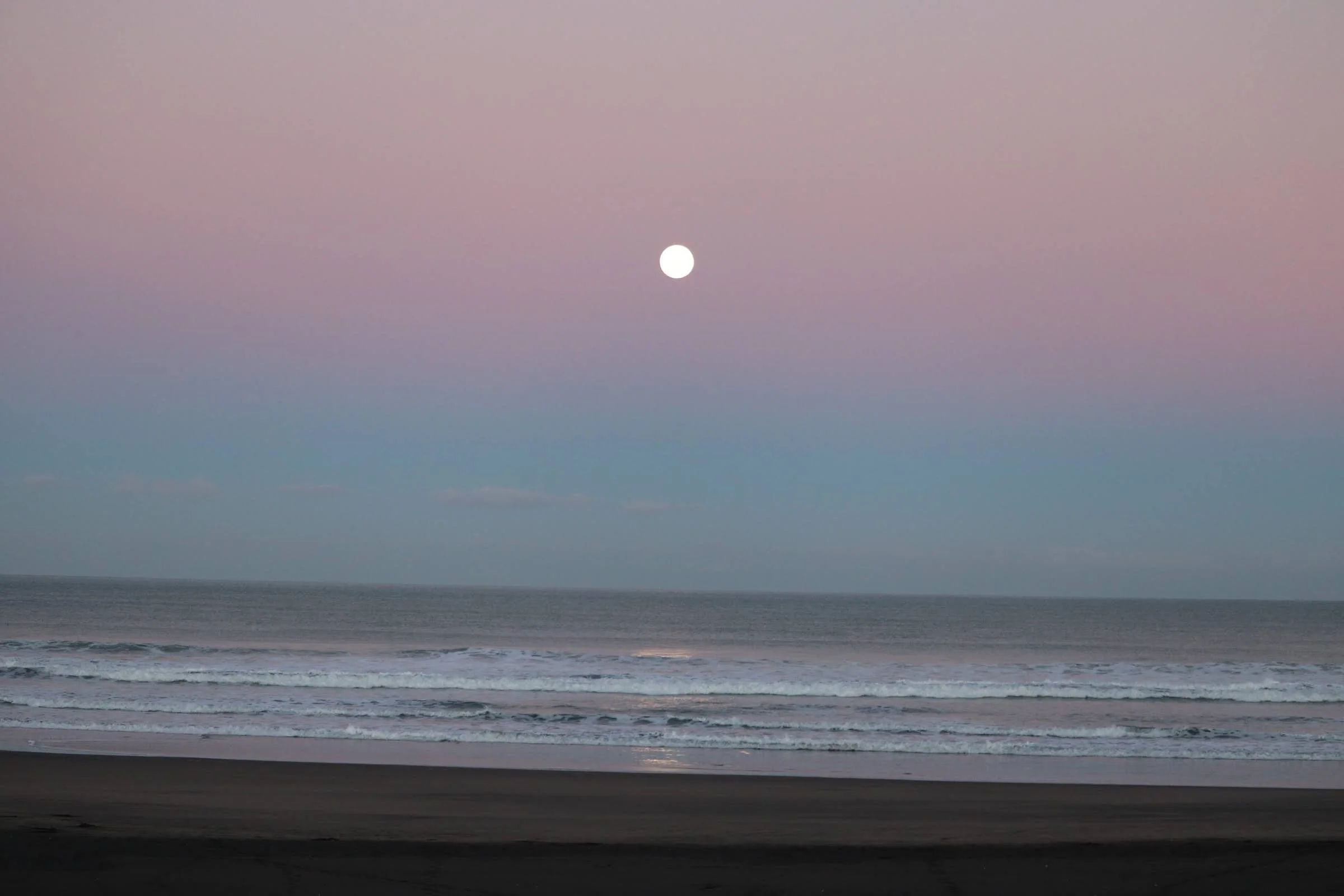
Swim only between the red and yellow flags. The flags mark the area lifeguards are actively patrolling and have assessed for current conditions. Outside the flags, you are on your own, and the lifeguards won't see you in time if something goes wrong.
If there are no flags, there are no lifeguards on duty, and you should not swim. This is the case overnight, in the off-season, and at times during the patrol season when conditions are too dangerous to flag.
If you get caught in a rip, don't fight it. Float, raise an arm, and signal for help. Rips pull you out, not under. They tire you only if you exhaust yourself swimming against them. Most rip drownings are caused by panic and exhaustion, not the current itself.
Do not swim under the influence of alcohol. Do not swim alone. Do not let children play in the surf unsupervised even in shallow water.
❋ The rules:
Lifeguard patrols run weekends and public holidays from late October to Easter, then daily through December and January. Times are typically 10am to 6pm but check current schedules with Piha Surf Life Saving Club or United North Piha Lifeguard Service before you rely on them.
❋ The Lifeguards.
❋ Surfing.
Piha is one of the country's serious surf beaches. If you're learning, take a lesson with one of the local schools — the rips, the rocks, and the crowd dynamics are not where you want to be self-taught. If you're experienced, check the conditions, respect the locals, and know that the break is busy on good days.
What’s in the village
More than you might expect, but come prepared.
The nearest is at Swanson or Glen Eden, both about half an hour back towards the city. Fill up before you commit to the drive.
❋ There is no petrol station in Piha.
No ATM in Piha. Bring cash if you'll need it.
❋ ATMs.
❋ Drinking water.
There are drinking fountains opposite the store.
Vodafone and Spark both work in most of the village but there will be places where signal drops in parts of the bush and at the far ends of the beach.
❋ Cell signal.
At both carparks and at the surf club, mid beach and opposite the store. Open year-round.
❋ Public toilets.
The Piha food landscape is small but well-formed once you know what's there.
Four sit-down restaurants worth knowing about, three of them reliably year-round:
Coastal Beach Diner at The Bowler at The Domain (Thursday to Sunday in winter, extended in summer)
Surfside Bites & Brew at the south end of the beach inside the Piha Surf Club building (typically seven days a week).
The Piha RSA — open seven days, one of the best meals in the village, and worth knowing about a 7pm moment of silence observed at all RSAs.
Aryeh at Piha North next to the General Store — a chef-led restaurant by Lucas Parkinson (formerly of Ode in Wānaka), with a deck looking at Lion Rock. Destination dining and priced accordingly; bookings recommended.
For coffee and a homemade pie before a walk or after a swim:
The Piha Store is open 364 days a year from 7.30am — the most reliably open thing in the village. In summer (Labour Day to Anzac weekend)
Murray — a Mexican-inspired food truck run by a local family from the bones of the old fish and chip shop — is part of the reason to come. Year-round (excepting mid-winter)
Cones on the Beach does real fruit ice cream at two beach locations, with fish and chips at the north-end site. There isn't a separate fish and chip shop; there used to be, and Murray is what its building became — but four of the restaurants do their own version, and there's an unresolved village debate about which is best.
See where to eat in Piha for full details.
❋ Food and drink.
❋ Groceries.
The Piha Store at Piha North is open 364 days a year and carries a wider range than you'd expect for a village shop — not a Four Square, but enough to cover the gaps. For a self-catered weekend, bring the bulk of what you need with you and top up at the Store. Worth knowing: the Store doesn't sell alcohol or cigarettes, so bring those from the city.
What to bring
For a beach day in summer: sunscreen (the UV here is brutal), a hat, water, something for the hot black sand on bare feet, and a wind layer for when the afternoon onshore picks up.
Closed shoes (the bush tracks are muddy year-round in places), a rain layer (weather changes fast), water, and something warm if you're going up to Mercer Bay where the wind exposure is real.
❋ For a walk:
Waterproofs, layers, a thermos if you have one, and lower expectations about what's open.
❋ For a winter visit:
Your own gear, plus the same layers and water as above. Wetsuit year-round unless you're hardy; the Tasman is cold even in February.
❋ For surfing or swimming:
A few other things worth knowing
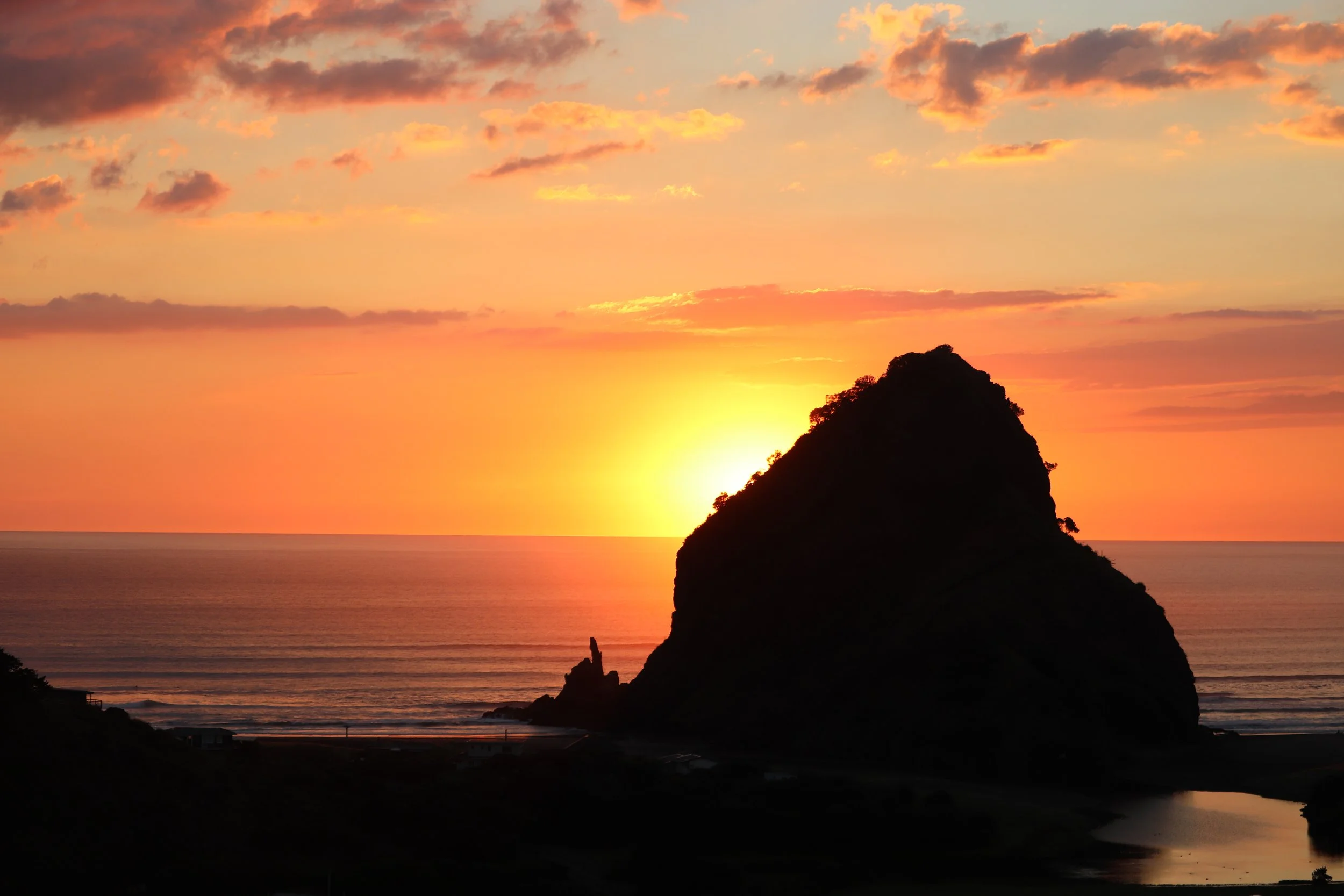
The sunset itself is good year-round; the kind of sunset and the practicality of watching it changes substantially with the season.
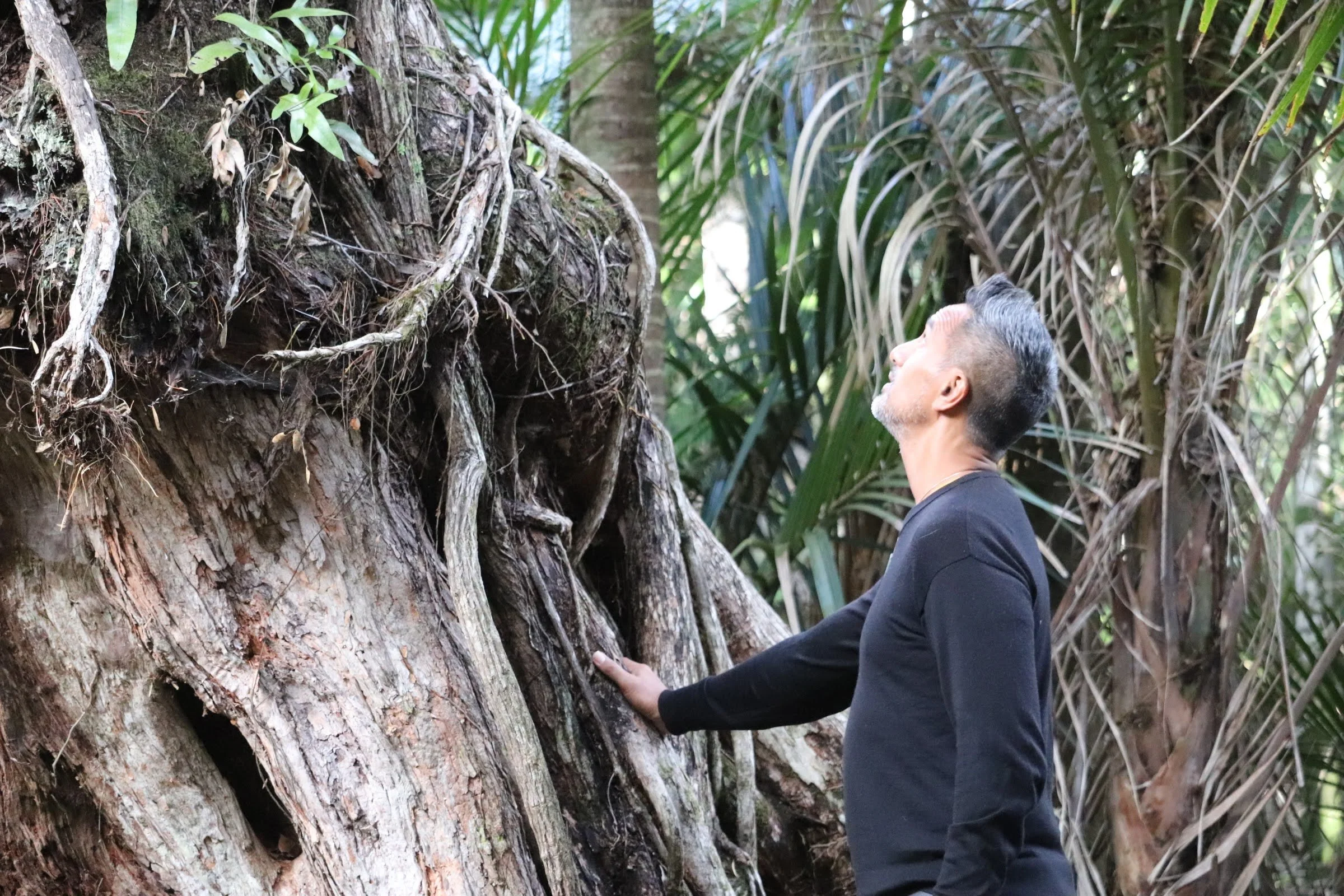
The bush around Piha includes some of the last great kauri stands in Auckland. All track entrances have shoe-cleaning stations. Use them, every time, even if you've cleaned your shoes already that day. The disease is spread by soil on footwear and is killing the trees.
❋ Kauri dieback.
Restricted in the Waitākere Ranges Regional Park. Don't fly them over the beach in summer; you'll lose the drone and possibly your day to a quiet conversation with a council officer.
❋ Drones.
Kitekite Falls and the Mercer Bay loop are the two most popular. Both are worth the time. See walks worth doing in Piha for details, current track conditions, and which one suits you.
❋ Walks.
Allowed on the North end beach from mid beach onwards. Well sign posted.
Not allowed on Piha beach (the south end).
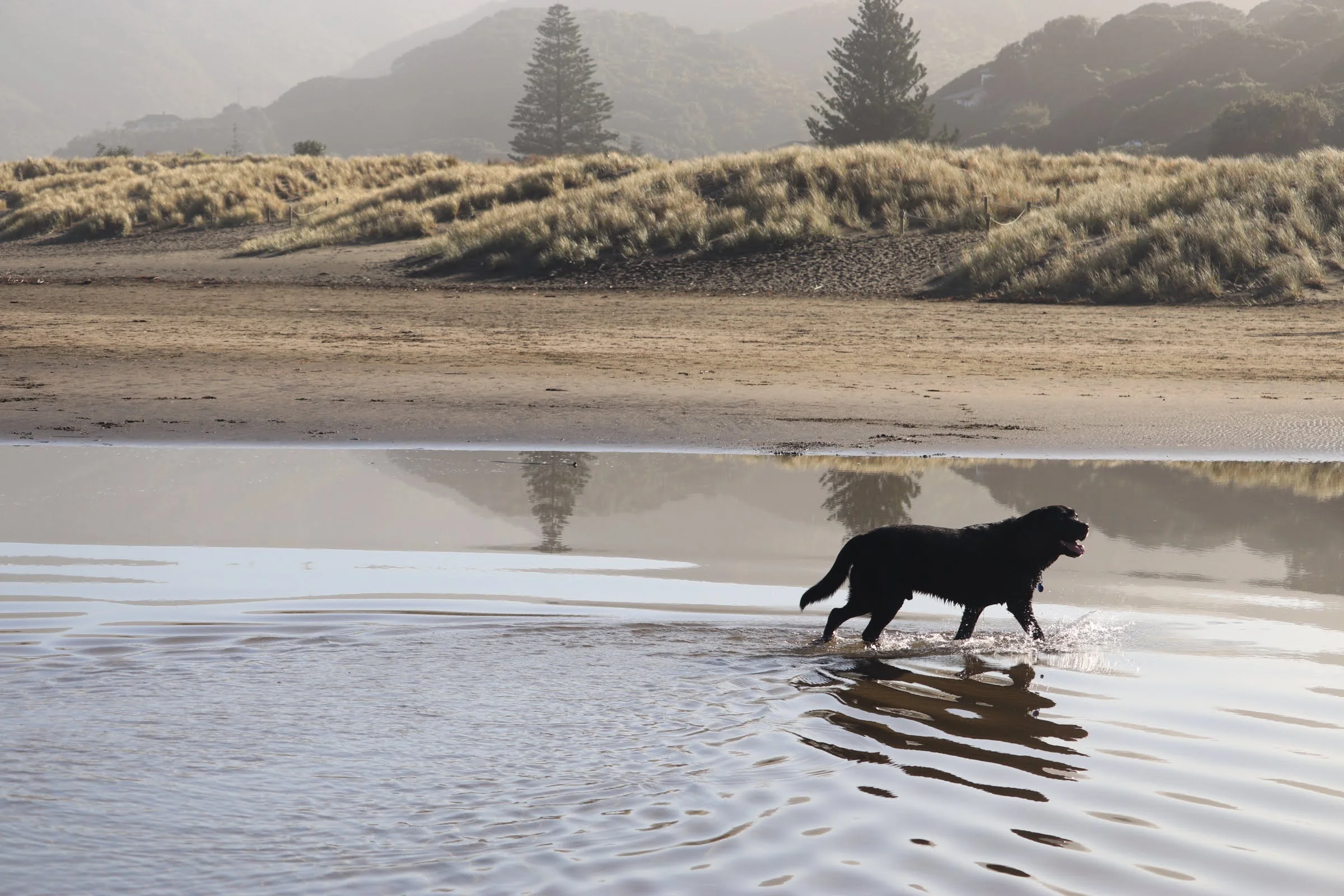
❋ Dogs.
The lagoon isn’t considered great quality water for swimming but does change - check the council website for more up to date information.
The “blue pools” at Piha, to the far left can be a safer family swimming hole.
❋ Swimming in the lagoon.
If something goes wrong
In an emergency, dial 111. Ask for local first response.
For surf rescue, call 111 and ask for police, who will dispatch surf lifeguards. If you're at the beach, run to the surf club or to any patrolled area and shout for help.
❋ Surf rescue.
For non-emergency local information, the Piha Community Library has noticeboards with current local services and contacts.
❋ Non-emergency.
For lost persons in the bush, dial 111 and ask for police. Do not attempt to search alone in failing light; the terrain around Piha is genuinely difficult and search and rescue would rather find one missing person than two.
❋ Lost persons.